A custom figure begins as a sketch, but its quality is decided across many small steps: sculpting, prototyping, material selection, paint application, and final inspection. In 2026, buyers comparing Custom Toy Figurines suppliers worldwide need more than attractive portfolio images. They need clear sample policies, realistic production timelines, responsive communication, and evidence that a supplier can repeat the approved finish across an entire order. Small details matter. A crisp face, smooth seams, and consistent color can separate a shelf-ready figure from a disappointing batch.
Design researcher Don Norman offers a useful standard: “Good design is actually a lot harder to notice than poor design, in part because good designs fit our needs so well that the design is invisible.” That principle applies here: a figure should feel balanced in hand, stand securely, and show clean details without distracting flaws. The guide ahead compares suppliers by their production capabilities, customization options, quality controls, and ability to support different project sizes. It also considers practical questions, such as how revisions are handled and whether prototypes reveal issues before full production begins.
A polished sample can still hide production risks. Ask for specifics. Review finish photos, clarify packaging, and confirm who checks each stage. This takes time, and some comparisons will remain imperfect; supplier claims are not always easy to verify from a distance. A careful shortlist, backed by samples and direct questions, gives buyers a more dependable starting point for choosing a worldwide partner.
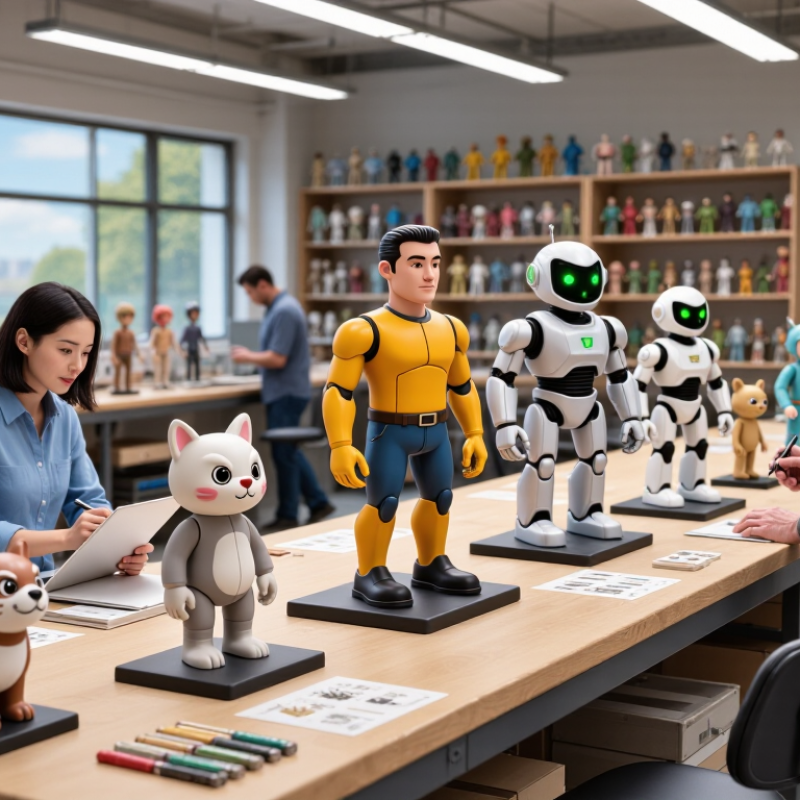
What Custom Toy Figurines Are and How They Are Made
Custom toy figurines are small, three-dimensional characters made to match a specific design, story, or audience. They may represent people, animals, mascots, or original fictional figures. Unlike mass-produced toys, each detail can be adjusted, from facial expression to clothing texture.
The process usually starts with a clear brief, reference images, measurements, and material preferences. A designer then builds a digital sculpt or hand-made clay model. The first prototype often reveals problems that drawings hide. Hands may look too large. Thin accessories may break easily. An experienced supplier checks proportions, balance, surface quality, and child-safe edges before production.
After approval, the prototype may be printed in resin or used to create a production mold. Vinyl, resin, PVC, or other suitable materials can then form the figurine. Workers remove seams, smooth rough areas, and inspect each piece. Painting is applied in layers, with careful attention to skin tones, small symbols, and clean borders. Some color differences are unavoidable in hand-finishing. That is not always a defect, but it needs clear limits. Samples should be tested for durability, paint adhesion, odor, and packaging protection. A reliable supplier records these checks and communicates changes before larger production begins.
Materials, Production Methods, and Customization Options
2026 Best Custom Toy Figurines Suppliers Worldwide
Choosing a reliable custom toy figurine supplier starts with materials. PVC suits flexible details and larger production runs, while ABS offers stronger parts and sharper edges. Resin captures tiny sculpting features, but it may chip more easily during shipping. Wood and biodegradable blends create different textures, though they require careful moisture control.
Production methods affect both quality and cost. Injection molding supports consistent shapes across thousands of pieces. Rotational molding works well for hollow, rounded designs. Resin casting helps with short runs and complex prototypes. 3D printing can test a character quickly, but printed layers may need sanding before painting. Hand painting adds personality. It also creates small color differences.
Customization should cover more than the character’s face. Suppliers may adjust height, pose, surface texture, accessories, packaging, and color references. Ask for a physical prototype. Digital previews can hide weak joints, uneven paint, or unsuitable proportions. Safety checks should include material declarations, sharp-edge inspection, small-part review, and batch traceability for the intended market. Documentation matters.
Some designs fail at scale. Tiny horns, thin fingers, or deep grooves may look excellent on a screen but break during production. Experienced suppliers explain these limits instead of accepting every request. I would also compare painted samples under normal lighting, not only studio photographs. A perfect sample is useful, but repeatable quality matters more.
How to Evaluate Custom Toy Figurine Suppliers
Evaluating a custom toy figurine supplier requires more than comparing prices. Request a physical prototype before signing a large order. Inspect its paint edges, joint movement, surface texture, and packaging protection. A clear photo can hide uneven molding or tiny cracks.
Ask how the supplier controls materials and production. Reliable teams should provide material specifications, safety test reports, and a documented inspection process. Check whether the same staff reviews color accuracy, dimensions, and assembly at several stages. Ask for production samples from different batches. One perfect sample proves little.
Communication is equally important. Confirm minimum order quantities, prototype fees, revision limits, lead times, and shipping responsibilities in writing. A capable supplier should explain risks instead of promising everything. Watch response quality. Vague answers may become expensive delays. No supplier is flawless. I would still question a factory with an impressive catalog but weak quality records. Visit the facility when possible, or request a live video inspection. Keep approved samples, color references, and packaging drawings for later comparison. My own evaluation checklist would likely miss something, especially when a design has unusual parts, so an independent quality inspection can provide useful criticism before shipment.
Global Supplier Regions and Their Manufacturing Strengths
For custom toy figurines, supplier regions offer different manufacturing advantages. East Asia remains strong in detailed sculpting, precise tooling, and large-scale production. Factories there often manage complex parts, painted surfaces, and tight assembly tolerances. Their supplier networks can also shorten material lead times.
Southeast Asia provides flexible labor and competitive pricing for medium-volume projects. Several production centers specialize in hand painting, soft vinyl work, and mixed-material figures. Quality may vary between factories, so sample approval deserves serious attention. A low quotation can hide extra finishing costs. That assumption can fail.
European suppliers often stand out in artistic development, small-batch production, and collectible craftsmanship. Their teams may offer stronger design communication and careful surface inspection. North American manufacturers can support rapid prototyping, local coordination, and shorter delivery routes for regional buyers. However, production costs are usually higher. Eastern Europe and Latin America can serve as practical alternatives for regional distribution and flexible order sizes.
Factory audits should examine mold wear, paint consistency, worker training, and packaging tests. Request production samples from the actual facility, not only polished showroom pieces. Small flaws matter.
A figurine may look excellent under studio lighting but reveal uneven paint near the eyes. Reliable sourcing depends on documented inspections, clear tolerances, and realistic production schedules. No region is perfect. Teams must match the supplier’s strengths with the figurine’s complexity, volume, and target market.
How to Select and Work With a Supplier in 2026
Market growth does not make every supplier reliable.
Grand View Research valued the global toy market at USD 108.7 billion in 2023, with a projected 4.7% CAGR through 2030. Circana also reported 7% global toy sales growth in 2024 across tracked markets. These figures suggest opportunity, but they do not prove manufacturing quality.
Select suppliers by evidence, not attractive product photos. Request recent samples, factory photos, material declarations, testing records, and a clear production schedule. Ask about tooling ownership, minimum order quantities, color matching, packaging, and defect limits. For children’s products, require testing against applicable safety standards in each target market. Check whether the supplier can explain corrective actions, not merely show certificates.
Be specific.
Send a measured 3D file, Pantone references, paint locations, and tolerance limits. Approve a pre-production sample before paying the full balance. I still see buyers underestimate mold revisions, shipping delays, and packaging damage. That mistake is expensive. Circana’s 2024 findings also show changing toy demand, so avoid oversized first orders. A smaller pilot order can test consistency, communication, and sell-through. Use written milestones for sampling, tooling, inspection, shipment, and payment. An independent pre-shipment inspection adds useful evidence, although it cannot replace factory-level quality control. Review the supplier quarterly, because a good first batch may hide later shortcuts.
FAQS
It is a small, three-dimensional character made to match a specific design or story. Facial expressions, clothing, and surface details can be adjusted.
The process begins with a design brief, reference images, measurements, and material choices. A designer creates a digital sculpt or clay model. The prototype may reveal awkward proportions or fragile parts. Small hands can look oversized.
Common options include vinyl, resin, and PVC. The right choice depends on the design and intended use. Ask for material specifications before production.
Check paint edges, surface texture, proportions, and packaging protection. Look closely at thin accessories and tiny cracks. Photos can hide defects.
Request samples from different production batches, material details, test records, and inspection procedures. One flawless sample is not enough. Ask how the supplier corrects problems.
Confirm prototype fees, order minimums, revision limits, lead times, and shipping responsibilities. Include dimensions, color references, paint locations, and acceptable defect limits.
Approve a pre-production sample and set written milestones for tooling, inspection, and shipment. A smaller pilot order can reveal inconsistent quality. Delays still happen.
A pre-shipment inspection can identify visible issues before goods leave the factory. It adds useful evidence, but cannot replace routine factory checks. I might still miss an unusual design flaw.
Conclusion
Custom Toy Figurines are small, highly personalized models created to represent characters, people, mascots, animals, or original concepts. They are typically developed from sketches, digital files, or physical references, then produced through methods such as 3D printing, resin casting, injection molding, or hand finishing. Common materials include resin, PVC, ABS, vinyl, and environmentally considerate alternatives. Buyers can often customize the figurine’s size, pose, facial details, colors, clothing, accessories, packaging, and surface effects.
When evaluating suppliers in 2026, consider their design support, material quality, production capabilities, sample accuracy, minimum order quantities, pricing transparency, quality-control process, communication, and delivery reliability. Different regions may offer strengths in prototyping, detailed craftsmanship, large-scale manufacturing, or flexible small-batch production. A successful supplier relationship begins with a clear product brief, reference files, technical specifications, timeline, and budget. Requesting samples, confirming revisions, documenting approvals, and maintaining regular communication can help ensure consistent results and reduce production risks.