Industry Knowledge & Guides

Plush Toy Manufacturing Blog & Insights

Expert advice, design tips, and manufacturing insights from 30+ years in custom stuffed animal creation.

Design & Production Tips

From Concept to Retail Shelf

Discover how top global brands bring custom plush characters to life with quality & safety testing.

Plush Industry Trends

Innovations in Custom Plush Toys

Explore trends in eco-friendly fabrics, sensory therapy plushies, and custom brand giveaways.

0%

Choosing Sensory Therapy Plush Toys in 2026 requires more than finding the softest animal on a shelf. Children may seek pressure, gentle movement, predictable textures, or quiet companionship. A plush toy can support calming routines, but it cannot replace professional assessment or individualized care.

Dr. Lucy Jane Miller, an occupational therapist and sensory processing researcher, explains, “Sensory Processing Disorder is a condition in which sensory signals don't get organized into appropriate responses.” Her statement reminds buyers to observe carefully. Does the child squeeze the toy, rub its ears, or avoid certain fabrics? Small details matter. A scratchy seam may ruin an otherwise thoughtful design.

This buying guide examines fabric feel, filling weight, sound features, washable construction, size, and age suitability. It also considers whether the toy encourages safe, repeatable use during bedtime, travel, classroom transitions, or quiet play. Look for securely stitched parts. Check care labels. Review manufacturer testing information when available.

Not every popular product will suit every child. That is the uncomfortable truth. A weighted plush may feel reassuring to one child and restrictive to another. A vibrating feature may calm some users but overwhelm others. Caregivers should introduce new sensory input gradually and watch for changes in breathing, posture, mood, or avoidance.

The best choice is rarely the most expensive one. It is the toy that fits the child’s sensory preferences, daily routine, and supervision needs. Even this guide has limits. Children change, and their responses may change with them.
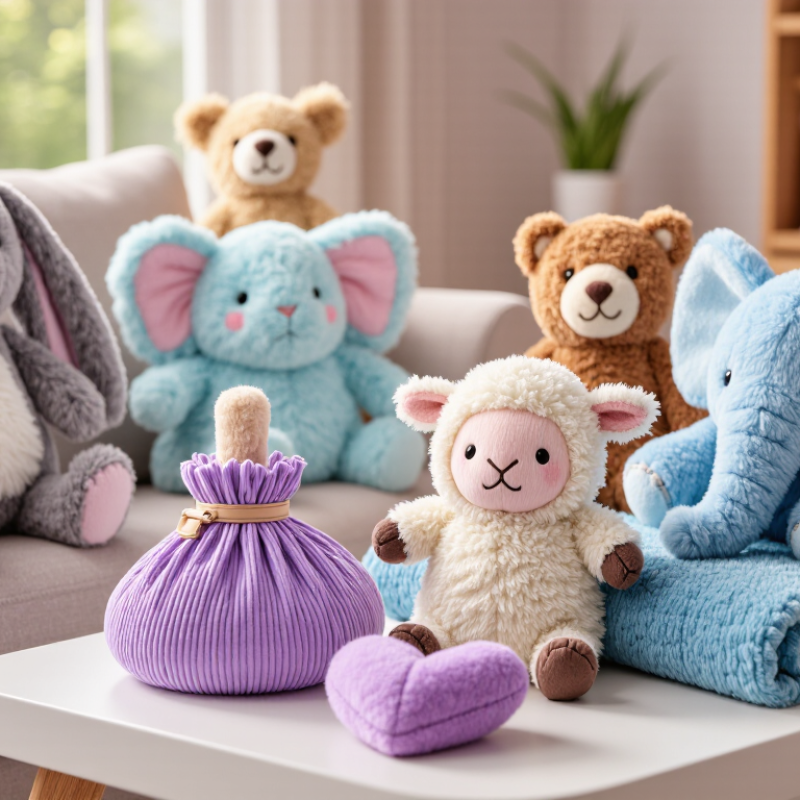
2026 Top Sensory Therapy Plush Toys Buying Guide

Define Sensory Plush Toys: Tactile, Proprioceptive, and Auditory Inputs

Sensory plush toys are designed to offer more than softness. They provide controlled sensory input through touch, body pressure, and sound. A suitable toy may help a child explore sensations, settle after activity, or stay engaged during quiet play. It is not a universal therapy tool, however. Individual responses can vary widely.

Tactile input comes from textures such as corduroy panels, smooth satin patches, raised stitching, or soft filling. Let the user touch each surface before choosing. Proprioceptive input relates to body awareness. A gently weighted or squeezable plush toy may provide calming pressure when held against the chest or lap. The weight should remain manageable, and the toy should never restrict movement or breathing. I once assumed heavier meant more helpful. That was too simple.

Auditory input may include crinkling fabric, gentle rattles, or removable sound inserts. Check the volume in a quiet room. Sudden, sharp sounds can overwhelm sensitive users instead of supporting regulation. Inspect seams, stitching, fasteners, and filling regularly. Washable covers are practical for frequent use. Adults should observe posture, mood, and repeated behavior during play. A child who grips tightly may be seeking pressure, while a child who avoids one texture may be communicating discomfort. Professional guidance can improve decisions, especially when sensory needs affect daily routines. A plush toy should complement—not replace—individual assessment and supportive care.

Map Sensory Needs to Features Using AAP Guidance and OT Frameworks

2026 Top Sensory Therapy Plush Toys Buying Guide

Map sensory needs to features, rather than choosing by appearance. AAP guidance encourages caregivers to observe behavior, routines, and triggers. A child who covers their ears may prefer a quiet, soft plush toy. A child who seeks pressure may enjoy firm, squeezable fabric. However, sensory preferences differ widely. Watch the child.

Use an occupational therapy lens: consider the child, the environment, and the daily activity. For tactile input, select varied textures, such as smooth fabric, raised stitching, or ribbed patches. For proprioceptive input, choose a manageable plush with firm filling and easy squeezing. Avoid oversized or excessively heavy designs without professional advice. For visual sensitivity, muted colors and simple faces may reduce distraction. For oral sensory seekers, select washable toys without loose parts, ribbons, or detachable decorations.

Safety remains practical, not decorative. Check seams, stitching, age guidance, cleaning instructions, and accessible fillings. Observe whether the toy helps dressing, bedtime, travel, or calm play. An OT-informed trial can last several days, with notes on setting, behavior, and recovery time. Keep it simple. A toy may soothe one child and irritate another. If distress, sleep disruption, developmental concerns, or persistent sensory difficulties continue, discuss them with a pediatrician or qualified occupational therapist. The buying decision may need revision.

2026 Top Sensory Therapy Plush Toys Buying Guide

Map sensory needs to practical plush-toy features using AAP-informed safety principles and occupational therapy sensory-support frameworks.

The index counts five practical buying checks: low sensory load, tactile variety, predictable interaction, easy cleaning, and safety suitability. Higher values indicate more feature checks to review for that sensory need; they are not clinical treatment scores. Select age-appropriate products, avoid detachable small parts, inspect seams regularly, and consult an occupational therapist for individualized sensory plans.

Compare 2026 Materials, Weight, Texture, Washability, and Durability

2026 Top Sensory Therapy Plush Toys Buying Guide

When comparing sensory therapy plush toys in 2026, start with the filling and outer fabric. Organic cotton, polyester fleece, and knitted blends create different sensory experiences. Fleece feels warm and smooth, while knitted fabric offers small ridges under the fingers. Check seams closely; loose stitching can turn a comforting toy into a frustrating one. I have found that texture preference is personal, not predictable.

Weight also changes how a plush toy feels during quiet activities. A light toy is easier for small hands to carry and reposition. A heavier design may feel grounding, but it should not restrict movement or cause discomfort. Look for evenly distributed filling, not one dense lump in the belly. Press both sides and compare them. This simple check reveals uneven construction.

Washability affects daily value more than attractive packaging. Choose removable covers, secure closures, and fabrics that tolerate gentle machine washing. Air drying helps reduce shrinkage and protects the filling’s shape. Inspect the label carefully, because “washable” may only mean spot cleaning. Durability depends on stitching, fabric recovery, and repeated washing. My own comparison was not perfect; some textures changed after several cycles. That result deserves attention. A practical test includes checking color transfer with a damp white cloth and examining seams after drying.

Check CPSC, ASTM F963, and CPSIA Safety Requirements Before Buying

Before buying a sensory therapy plush toy, check more than softness, weight, or calming colors. The U.S. Consumer Product Safety Commission reported about 231,000 toy-related emergency-room injuries among children aged 14 and younger in 2023. Its report also recorded 10 toy-related deaths. These figures make safety testing practical, not optional.

In the United States, children’s plush toys must meet ASTM F963 requirements, including rules for small parts, seams, surface coatings, stuffing, and accessible components. CPSIA also requires limits on lead and phthalates, applicable third-party testing, and a Children’s Product Certificate. Check the product’s age grade, tracking label, and test documentation. A stitched label alone is not proof. I once assumed a heavier plush was automatically safer. That was a poor assumption; loose beads, magnets, or battery parts can create serious hazards. Review the latest CPSC guidance because standards and enforcement details can change.

Tips: Press every seam and inspect ears, eyes, zippers, and weighted sections. Avoid toys with detachable pieces for children under three. Confirm that battery compartments require a tool to open. Ask the seller for ASTM F963 and CPSIA compliance evidence, not vague “certified” language. The 2024 CPSC Annual Report on Toy-Related Injuries also supports careful age selection and supervision, especially when toys include sensory inserts or unusual textures.

2026 Top Sensory Therapy Plush Toys Buying Guide - Check CPSC, ASTM F963, and CPSIA Safety Requirements Before Buying

Safety Dimension Applicable Requirement or Standard What to Check Before Buying Useful Evidence or Documentation Priority
Age grading The product should be age-graded according to its intended use, design, materials, and foreseeable misuse. U.S. toy products must comply with applicable CPSC toy requirements. Confirm that the recommended age is clear and appropriate. Do not give a toy marked for older children to an infant or toddler. Visible age label, product instructions, warning statements, and an age-grading rationale where available. Critical
ASTM F963 toy safety testing ASTM F963 is the U.S. toy safety standard referenced by federal toy regulations. Applicable provisions may include mechanical, physical, flammability, chemical, electrical, and labeling requirements. Look for a clear statement that the finished toy was tested to the current applicable version of ASTM F963, rather than relying only on a general “non-toxic” claim. Children’s Product Certificate, laboratory test report, and test scope identifying the finished product and applicable ASTM F963 sections. Critical
CPSC compliance Children’s toys may be subject to CPSC rules, including 16 CFR Part 1250, 16 CFR Part 1501 for small parts, applicable flammability rules, and other product-specific requirements. Check whether the toy contains detachable parts, decorative elements, magnets, batteries, sound modules, or other features that may trigger additional rules. Current compliance statement, test reports, recall history check, and product-specific warning information. Critical
CPSIA lead limits The Consumer Product Safety Improvement Act restricts lead in accessible parts of children’s products. The general limit for accessible component parts is 100 parts per million, subject to applicable statutory and regulatory provisions. Pay particular attention to painted details, metal accessories, zippers, snaps, printed decorations, and any accessible hard components. Third-party chemical test report covering accessible substrates, coatings, and components. Critical
Restricted phthalates CPSIA restricts certain phthalates in accessible plasticized components of children’s toys and child-care articles. The commonly applicable limit is 0.1% for each restricted phthalate, subject to the exact legal scope. Check soft vinyl, rubberized coatings, flexible plastic labels, teething-like parts, cords, and other plasticized accessories. Phthalate screening report identifying tested materials and detection limits. Critical
Small parts and detachable components 16 CFR Part 1501 addresses small parts and small-part hazards for products intended for young children. ASTM F963 also includes mechanical and physical safety tests. Avoid loose eyes, buttons, beads, bells, plastic clips, detachable ribbons, or poorly secured seams for children under three. Inspect the toy after pulling and squeezing. Mechanical test report, small-parts assessment, seam-strength results, and clear choking-hazard warnings where required. Critical
Magnets High-powered magnets in children’s products may be subject to specific CPSC requirements and can create a serious ingestion hazard if swallowed. Avoid accessible or easily detachable magnets. Check magnetic closures, removable accessories, and hidden magnetic inserts. Magnet inventory, retention testing, risk assessment, and applicable compliance test results. Critical
Battery and electronic safety Electronic plush toys may require additional requirements for battery compartments, button or coin cell batteries, wiring, heating, sound, and electrical safety. Prefer a secured battery compartment requiring a tool. Do not buy a product with an easily opened compartment, exposed wiring, overheating, or damaged insulation. Battery-compartment retention test, electrical test report, battery warnings, and instructions for safe disposal. Critical
Flammability Applicable CPSC flammability requirements address the burning behavior of toys and textile materials. The exact test depends on the product’s construction and intended use. Keep plush toys away from open flames, heaters, candles, and hot surfaces. Avoid products with loose, highly combustible fibers or damaged fabric. Flammability test report for the finished construction, including fabric, filling, trims, and surface treatments. High
Seams, stitching, and filling Mechanical safety evaluation should consider foreseeable use, abuse, seam integrity, stuffing access, and the release of internal materials. Check for open seams, loose threads, exposed stuffing, weak attachments, sharp internal edges, or stuffing that can be pulled out. Seam-strength and tension testing, inspection records, and production quality-control procedures. High
Materials and skin contact Materials should be suitable for children’s products and free from prohibited or restricted substances applicable to the finished item. Choose soft, colorfast fabrics with no strong chemical odor, oily residue, shedding fibers, or irritating surface treatments. Stop use if redness or irritation occurs. Material declarations, chemical screening, colorfastness results, and finishing-process controls. High
Hygiene and washability Washability is not itself a substitute for regulatory compliance, but it is important for sensory products that are frequently handled, mouthed, or used during calming routines. Check care instructions, removable electronic modules, colorfastness, drying requirements, and whether the toy can be cleaned without damaging seams. Care label, wash-cycle testing, colorfastness results, and cleaning instructions. Medium
Sensory features and therapeutic claims Sensory benefits such as texture, weight, sound, or vibration should not be treated as medical claims unless supported by appropriate evidence and professional guidance. Select features that match the user’s sensory preferences. Avoid excessive weight, intense vibration, loud sound, or small accessories that could create additional hazards. Feature specifications, sound-level information, weight details, usage instructions, and professional recommendations when relevant. High
Tracking label CPSIA requires applicable children’s products to bear permanent distinguishing information, commonly including manufacturer or private-labeler details, production location and date, and batch or run information. Check the toy, packaging, or attached label for traceable production information that remains available after purchase. Permanent tracking label, packaging records, lot code, production date, and supply-chain documentation. High
Children’s Product Certificate For products subject to CPSC rules, the responsible party generally must issue a Children’s Product Certificate based on testing by a CPSC-accepted third-party laboratory. Ask whether a current certificate exists for the exact product, model, material configuration, and production period. Current CPC listing applicable regulations, test dates, product identification, and responsible-party information. Critical
Warnings and instructions Required warnings must be clear, conspicuous, and appropriate to the identified hazard and age group. Additional instructions may be needed for batteries, magnets, weighted products, or cleaning. Read every warning before purchase. Confirm that instructions are provided in the language and format needed by the user or caregiver. Packaging warnings, permanent labels, instruction sheet, and accessible digital instructions where available. High
Recall and incident review CPSC publishes recalls and safety alerts for children’s products. A product history review can help identify known hazards before purchase. Search the official CPSC recall database using the product type, model number, and any available identification code. CPSC recall search result, seller safety notices, product incident history, and return or replacement policy. High
Buyer reminder: Regulatory requirements can vary by product design, age grade, materials, electronics, and intended market. Verify the latest CPSC rules, ASTM F963 edition, CPSIA requirements, warnings, recalls, and laboratory documentation for the exact product before purchase.

Build a Data-Led Shortlist: CDC Reports Autism in 1 in 31 Children

2026 Top Sensory Therapy Plush Toys Buying Guide

The CDC’s latest ADDM report identified autism in 1 in 31 eight-year-old children across monitored U.S. communities. This figure reflects surveillance data, not every child worldwide. It still signals a growing need for thoughtful sensory supports at home, school, and during travel.

A plush toy cannot treat autism. It may offer comfort, predictable texture, or a calming routine for some children.

Build a shortlist around observable needs. Check fabric softness, seam placement, washable construction, and resistance to loose parts. For a child seeking pressure, a weighted design may feel helpful, but weight must match professional guidance and the child’s age. Never assume heavier means better. Some children dislike pressure completely. Details matter.

During a trial, record when the toy is used, what texture the child chooses, and whether distress decreases. An occupational therapist can help interpret these observations. Avoid products with small detachable pieces, accessible filling, or unclear care instructions. Supervise younger children, especially during sleep or chewing.

My own buying rule would remain flexible: the most attractive toy may fail, while a simple, washable plush may become the trusted choice. Preferences can change quickly. Use judgment.

FAQS

Which materials create different sensory experiences?

Fleece feels warm and smooth. Knitted fabric adds small ridges beneath the fingers. Cotton blends may feel cooler and lighter.

How can I check whether the filling is evenly distributed?

Press both sides of the plush toy. Avoid one dense lump in the belly. Even filling usually feels more balanced.

Is a heavier plush toy always better for calming?

No. Weight may feel grounding for some children, but uncomfortable for others. Follow age guidance and professional advice.

What washing features should I look for?

Choose removable covers and secure closures. Check whether “washable” means machine washing or only spot cleaning. Air drying helps protect the shape.

How can I test durability before regular use?

Examine the seams closely. Rub a damp white cloth against the fabric for color transfer. Check stitching again after washing and drying.

Can a sensory plush toy treat autism?

No. It cannot treat autism or replace professional support. It may offer comfort, predictable texture, or a calming routine.

How should I test whether a child prefers the toy?

Record when the toy is used and which texture the child chooses. Note whether distress decreases. The results may be inconsistent.

What safety details deserve attention?

Avoid loose parts, exposed filling, and unclear care instructions. Supervise younger children during sleep or chewing. Small details matter.

Should I choose the most attractive plush toy?

Not necessarily. A simple, washable toy may become the trusted choice. Preferences can change quickly. My comparison was not perfect.

Conclusion

This 2026 buying guide explains how Sensory Therapy Plush Toys can support children who seek tactile, proprioceptive, or auditory input. It shows caregivers how to connect individual sensory needs with practical features, using principles associated with pediatric guidance and occupational therapy frameworks. Soft fabrics, varied textures, gentle sounds, and suitable weight can each provide different forms of sensory feedback, but the right choice should always reflect the child’s preferences, developmental stage, and ability to use the toy safely.

The guide also compares current materials, construction quality, washability, weight distribution, texture, and long-term durability. It recommends building a data-led shortlist while considering the CDC-reported autism prevalence of 1 in 31 children, without assuming every child has the same needs. Before buying, caregivers should check labeling and testing information related to CPSC requirements, ASTM F963, and CPSIA, including age guidance, small-part risks, seams, fillings, and cleaning instructions. A thoughtful selection can balance comfort, sensory value, hygiene, and everyday safety.

Amelia Sterling

Amelia Sterling

Amelia Sterling is a professional marketing specialist dedicated to helping businesses understand how thoughtful strategy, reliable products, and meaningful customer experiences work together to create lasting value. With a strong understanding of the company’s products, services, and market......