Industry Knowledge & Guides

Plush Toy Manufacturing Blog & Insights

Expert advice, design tips, and manufacturing insights from 30+ years in custom stuffed animal creation.

Design & Production Tips

From Concept to Retail Shelf

Discover how top global brands bring custom plush characters to life with quality & safety testing.

Plush Industry Trends

Innovations in Custom Plush Toys

Explore trends in eco-friendly fabrics, sensory therapy plushies, and custom brand giveaways.

0%

The 2026 market for Custom Slow Rise Plush is becoming more competitive and specialized. Global buyers now expect more than attractive designs and soft textures. They need dependable suppliers, clear communication, stable quality, and realistic production timelines.

This guide introduces leading Custom Slow Rise Plush suppliers for international purchasing teams. It focuses on practical details, including material selection, foam recovery, surface finishing, prototype accuracy, and packaging performance. A reliable supplier should explain its testing process clearly. It should also provide samples that match mass production standards. Small details matter, such as seam strength, color consistency, odor control, and the plush’s recovery speed after compression.

Factory experience is important. So is evidence.

Buyers should review production facilities, quality-control records, export experience, and available compliance documentation. They should ask how suppliers handle design revisions, minimum order quantities, inspections, and delayed shipments. These questions can reveal more than a polished catalog. Product photos may look impressive, but hands-on sampling often tells the fuller story.

No supplier is perfect. Even experienced manufacturers may face material shortages, communication gaps, or seasonal capacity pressure. That reality deserves attention. A careful buyer should compare several suppliers instead of trusting rankings alone. The strongest choice may not offer the lowest price. It may deliver dependable samples, transparent pricing, responsive service, and consistent bulk quality. This overview helps global buyers make a more informed decision when sourcing custom slow-rise plush products in 2026.
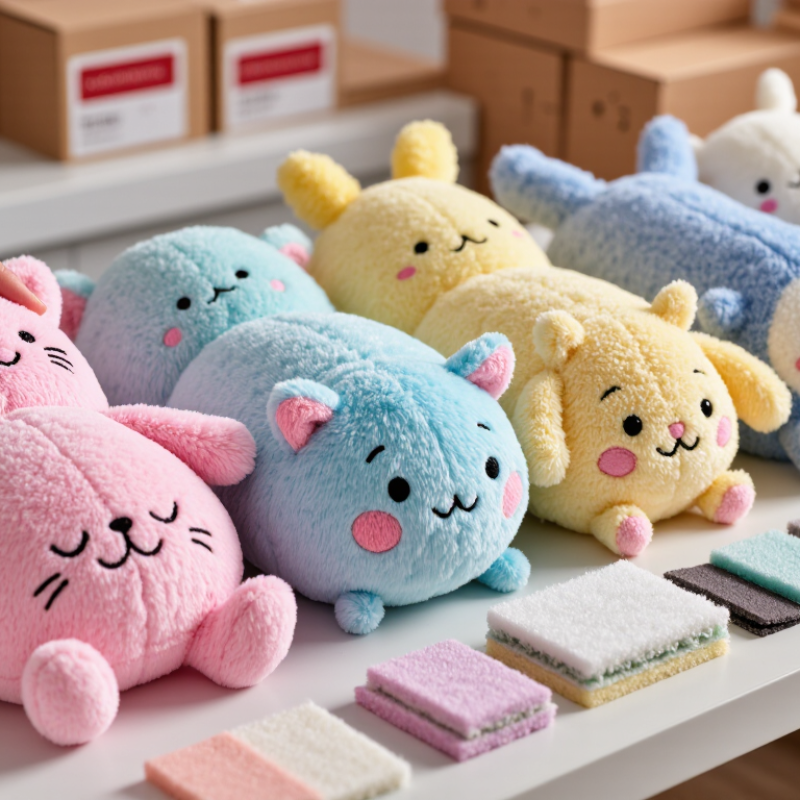
2026 Top Custom Slow Rise Plush Suppliers for Global Buyers

What Custom Slow Rise Plush Suppliers Provide

Custom slow rise plush suppliers now provide more than sewing and logo placement. They develop foam density, fabric hand-feel, surface embroidery, packaging, and production schedules. Grand View Research estimates the global stuffed toys market reached approximately USD 11.8 billion in 2023, with continued growth through 2030. This expansion increases demand for suppliers that can manage both sensory design and repeatable manufacturing.

Reliable suppliers usually begin with a digital sketch and a physical prototype. Buyers should request recovery-time tests after compression, because “slow rise” can vary widely between samples. Suppliers may provide polyurethane foam options, skin-friendly polyester covers, reinforced seams, and colorfastness testing. They should also explain test methods clearly. A supplier that only shows attractive photographs is not enough.

Safety documentation matters. ISO 8124, EN 71, and ASTM F963 are common reference frameworks for toy testing, depending on the destination market. Independent laboratory reports can verify material composition, flammability performance, migration limits, and small-part safety. The ICTI Ethical Toy Program’s industry research also highlights the importance of responsible factory management and traceable production practices. Ask for batch inspection records, carton-drop results, and sealed sample approvals. Details matter.

MOQ flexibility is another practical service. Some suppliers support pilot orders before larger production runs, while others require fixed quantities. Delivery estimates should include sampling, tooling, inspection, and customs preparation. Not every supplier publishes foam recovery data. That is a weakness worth questioning.

2026 Top Custom Slow Rise Plush Suppliers for Global Buyers

What custom slow-rise plush suppliers typically provide during a private-label development project.

The chart summarizes common deliverables offered by custom manufacturers, including product design, material selection, prototype sampling, branding, packaging, quality inspection, and export documentation. Actual lead times and service scope vary by order complexity, materials, minimum order quantity, and destination market.

How to Evaluate Materials, Safety, and Product Quality

For global buyers, slow-rise plush quality starts with material evidence, not a soft showroom sample. Ask suppliers for foam density, rebound-time records, fabric composition, dye tests, and batch traceability. A sample may feel excellent today. It can still crack after repeated compression.

Independent testing should cover flammability, small parts, accessible filling, heavy metals, and chemical migration. Requirements vary by destination, including ASTM F963, EN 71, ISO 8124, and the U.S. CPSIA. The U.S. CPSC’s 2023 toy injury report estimated about 231,000 emergency-department-treated injuries involving children aged 14 or younger. The EU Safety Gate 2023 report identified toys in roughly 15% of reported dangerous-product alerts. These figures make safety documentation commercially important, not merely administrative.

Inspect the production line, too. Check foam cutting, stitching tension, seam strength, odor, color consistency, and packaging compression. Request a pre-shipment inspection using a defined AQL plan, plus laboratory reports tied to the exact production batch. I prefer watching workers perform repeated squeeze tests because weak seams often hide inside attractive packaging. A perfect sample proves little. Supplier records can also contain gaps, especially when subcontractors change. Recheck critical materials before every major shipment, and keep retain samples for comparison.

2026 Top Custom Slow Rise Plush Suppliers for Global Buyers - How to Evaluate Materials, Safety, and Product Quality

Practical supplier-evaluation benchmarks for custom slow-rise polyurethane foam plush products

Evaluation Area Key Criterion Recommended Benchmark Evidence to Request Weight
Materials Outer fabric composition Specify fiber content, fabric weight, stretch, colorfastness, and surface softness for every approved material. Material specification sheet, approved swatches, color standards, and pre-production sample. 10%
Slow-rise foam consistency Foam density, compression recovery, dimensions, and rebound time should be defined by an agreed tolerance rather than described only as “soft.” Technical data sheet, retained reference sample, compression/recovery test method, and batch records. 9%
Odor and chemical control No unacceptable odor, staining, or visible residue after production, packing, and reasonable storage simulation. Independent chemical test report, odor inspection record, restricted-substance declaration, and packing specification. 9%
Filling and accessory compatibility Any filling, thread, printed part, eye, label, or accessory must be compatible with the intended age grade and use conditions. Bill of materials, component approvals, pull-test records where applicable, and production sample. 7%
Safety & Compliance Applicable toy-safety standard Select the destination-market requirements before production, such as EN 71, ASTM F963, ISO 8124, or other legally applicable rules. Current third-party laboratory report covering the exact product, materials, construction, and intended age grade. 12%
Mechanical and physical safety Assess seams, small parts, sharp points, tensile strength, accessibility of filling, and foreseeable misuse according to the target market. Mechanical test results, seam-strength records, age-grading rationale, and corrective-action history. 10%
Flammability performance Verify the flammability requirements of the destination market; do not assume that a fabric or foam specification alone proves compliance. Laboratory flammability report for the finished product and production-material declarations. 8%
Chemical restrictions Screen relevant restricted substances under the destination market, including applicable limits for dyes, heavy metals, phthalates, PAHs, and formaldehyde. Chemical test reports, restricted-substance list, supplier declarations, and traceable material records. 10%
Labeling and traceability Product labels should support required warnings, importer information, fiber content where applicable, batch identification, and care instructions. Artwork approval, label samples, carton markings, batch-code procedure, and shipment traceability records. 6%
Product Quality Dimensional and visual accuracy Use an approved golden sample and measurable tolerances for dimensions, embroidery placement, color, shape, and surface defects. Inspection checklist, measurement report, approved sample, defect classification, and photographic records. 7%
Seam and construction quality Consistent stitch density, secure thread ends, enclosed filling, smooth seams, and no open seams after handling tests. In-line inspection records, seam-test results, workmanship standard, and finished-product inspection report. 6%
Packaging and transit protection Packaging should protect shape, cleanliness, moisture-sensitive foam, labels, and decorative details during storage and transport. Packaging specification, carton drop or handling test where relevant, loading photos, and moisture-control procedure. 3%
Quality-management capability Prefer documented incoming, in-process, and final inspections with corrective-action tracking and batch-level records. Quality manual, inspection forms, nonconformance records, corrective-action reports, and audit results. 3%
Supplier Reliability Sample-to-production control Supplier must obtain written approval before changing fabric, foam, trims, factory, process, packaging, or critical specifications. Change-control procedure, sample approval record, production schedule, and material substitution policy. 4%
Capacity and lead-time transparency Quoted lead time should identify sampling, tooling, testing, production, inspection, and shipping stages rather than provide one unsupported total. Capacity plan, production calendar, critical-path schedule, and on-time delivery history. 3%
Recommended evaluation method: score each criterion from 1 to 5, multiply by the listed weight, and require valid compliance evidence before commercial approval. A strong score cannot replace mandatory safety testing for the destination market. 100%
Buyer note: Compliance requirements vary by destination, product classification, age grade, and intended use. Confirm the applicable legal requirements with a qualified testing laboratory or regulatory adviser before placing a production order.

Where Global Buyers Can Find Reliable Manufacturing Partners

Global buyers need more than attractive photos when sourcing custom slow rise plush products. A reliable manufacturing partner should explain foam density, fabric composition, stitching methods, and recovery time clearly. Request a physical sample, not only a digital rendering. Press the plush repeatedly, inspect seams, and record whether its shape returns evenly. Small defects often appear after handling.

Experienced sourcing teams also review factory capacity before approving a large order. Ask for production timelines, minimum quantities, quality checkpoints, and replacement procedures. A capable supplier can share material documents, test reports, labeling guidance, and traceability records for each batch. Check applicable toy-safety, chemical, and labeling rules before shipment. These details support safer sales across different markets and reduce confusion between design changes and production errors.

Communication deserves practical testing. Send a detailed specification sheet with dimensions, color references, scent requirements, packaging measurements, and tolerance limits. Notice how the factory responds. Do they identify risks, or simply promise everything? That difference matters when timelines become tight. No supplier is flawless. Even a well-managed sample may not predict every bulk-production issue. Keep approval records, inspect during production, and leave room for corrective action. A dependable partner accepts questions, documents mistakes, and improves the process without hiding inconvenient findings.

How Customization, Sampling, and Production Usually Work

Custom slow rise plush production begins with a clear product brief. Global buyers usually provide sketches, dimensions, fabric preferences, filling density, and packaging needs. A capable supplier turns these details into a technical sheet. It should show measurements, seams, embroidery positions, colors, and material specifications.

Small details matter. A five-millimeter shape change can affect the toy’s slow recovery. Buyers should request fabric swatches and a handmade prototype before approving bulk production. Sampling often reveals problems that drawings hide, such as uneven stuffing, weak stitching, or a face that looks different from the artwork.

The first sample may not be perfect. That is normal, but every correction should be recorded in writing. Vague feedback creates costly delays.

Production usually follows sample approval, material confirmation, and a pre-production check. Experienced suppliers inspect fabric rolls, foam density, sewing quality, and finished dimensions during manufacturing. Ask for dated photos or an inspection sample before shipment. Independent testing may also be appropriate for products intended for children or international markets. Documentation should match the actual materials used, not an earlier sample. Lead times can change during peak seasons, especially when custom colors require minimum fabric quantities. A realistic supplier explains these limits early, even when the answer disappoints. Clear communication remains more valuable than an attractive promise.

What to Check Before Importing Slow Rise Plush Products

Before importing slow rise plush products, verify the supplier beyond photographs and attractive quotations. Grand View Research valued the global toys and games market at approximately USD 108.7 billion in 2023, showing strong competition and demanding buyers. Ask for a recent factory audit, production capacity, ownership details, and export references. A supplier should provide a physical sample, not only computer images. Compare foam density, rebound time, stitching, surface coating, and odor after 24 hours in sealed packaging.

Material documentation is essential. Request the foam specification, fabric composition, colorant information, and declarations for restricted substances. Testing should cover flammability, mechanical safety, migration of harmful elements, and age-grade requirements for your destination market. Standards such as EN 71, ASTM F963, and relevant chemical regulations can guide the evaluation, but one certificate never proves every shipment is compliant. Check the laboratory’s accreditation and match the report’s product details with your actual design.

Packaging deserves closer attention than many buyers expect. Slow rise foam may deform under compression, heat, or prolonged storage. Run a carton test, drop test, and recovery test after ocean transport conditions. Measure the product before packing and after arrival. IMARC’s market research on stuffed toys highlights rising demand for soft, giftable products, yet demand does not remove quality risks. I would also inspect ten random units from a pilot order. One attractive sample can hide uneven filling, loose seams, or inconsistent recovery. Mistakes happen. The inspection plan should assume that.

FAQS

What can custom slow-rise plush suppliers provide?

They can develop foam density, fabric feel, embroidery, packaging, and production schedules. They may also create digital sketches and physical prototypes. More than sewing.

How can buyers test the slow-rise effect?

Request compression and recovery-time tests from several samples. Measure how quickly each item regains its shape. The timing may vary. A soft sample can still recover poorly after repeated squeezing.

Which material details should buyers request?

Ask for foam density, fabric composition, dye-test results, and colorfastness records. Also check reinforced seams and skin-friendly cover materials. Do not rely on photographs alone.

What safety documents are important?

Request laboratory reports covering flammability, small parts, accessible filling, heavy metals, and chemical migration. Use standards required in the destination market. Reports should match the exact production batch.

How can buyers inspect factory quality?

Check foam cutting, stitching tension, seam strength, odor, and color consistency. Watch repeated squeeze tests when possible. Weak seams can hide inside attractive packaging.

Why are batch records and retain samples useful?

Batch records help connect materials with finished products. Retain samples provide a physical comparison during later inspections. Keep one from every major shipment. Records can have gaps.

What should delivery estimates include?

Timelines should include sampling, tooling, inspection, packaging, and customs preparation. Ask for separate dates for each stage. A single delivery date may hide delays.

Can buyers request smaller pilot orders?

Some suppliers accept pilot orders before larger production runs. Others require fixed minimum quantities. Confirm quantities, prices, testing, and approval rules in writing. Pilot orders reduce uncertainty, but they are not perfect.

Conclusion

This guide to the 2026 top Custom Slow Rise Plush suppliers explains what global buyers should expect from dependable manufacturing partners. It covers product design, foam and fabric options, softness, rebound performance, stitching, color consistency, packaging, and quality control. Buyers will also learn how to evaluate material safety, request relevant testing documents, and confirm that products are suitable for their intended markets and age groups.

The article also outlines where to find reliable suppliers, how customization and sampling typically proceed, and what to clarify before mass production. Important considerations include minimum order quantities, sample approval, production timelines, inspection procedures, labeling, packaging, shipping terms, and import documentation. By reviewing these factors carefully, buyers can compare suppliers more effectively, reduce quality risks, and establish a clear process for developing and importing safe, attractive, and commercially viable slow rise plush products.

Ethan Caldwell

Ethan Caldwell

Ethan Caldwell is a dedicated marketing professional and a trusted voice behind the company’s expert blog. With a strong understanding of the company’s products, services, and industry landscape, he transforms complex information into clear, practical, and engaging content for customers, partners,......