Industry Knowledge & Guides

Plush Toy Manufacturing Blog & Insights

Expert advice, design tips, and manufacturing insights from 30+ years in custom stuffed animal creation.

Design & Production Tips

From Concept to Retail Shelf

Discover how top global brands bring custom plush characters to life with quality & safety testing.

Plush Industry Trends

Innovations in Custom Plush Toys

Explore trends in eco-friendly fabrics, sensory therapy plushies, and custom brand giveaways.

0%

Choosing a reliable maker is about more than finding a cute character. Childrens Book Plush Toys should connect a story to something a child can hold, revisit, and recognize. A stitched fox beside a picture book, soft paws, clear facial details, and durable seams can make that connection tangible. Small details matter.

For this guide, sourcing adviser Mei Lin offers an illustrative, editorial principle: “A good book plush should carry the story beyond the page, without distracting from it.” This is a guide-created quote, not a verified statement from an independently documented industry expert. A real expert quotation should be confirmed before publication.

The Top 10 manufacturers are introduced through practical comparison points: product range, customization options, material information, sample development, communication, and production capacity. Buyers should ask how embroidery, accessories, packaging, and book-and-toy sets are handled. Request clear specifications and physical samples where possible. Photos can hide uneven stitching.

No supplier is the right fit for every project. Some may suit small custom runs; others may focus on broader production programs. Details can change, and this outline is not a factory audit. Use it as a starting point for careful questions, not a substitute for direct verification. The best choice is the one whose capabilities match the story, budget, timeline, and quality expectations.
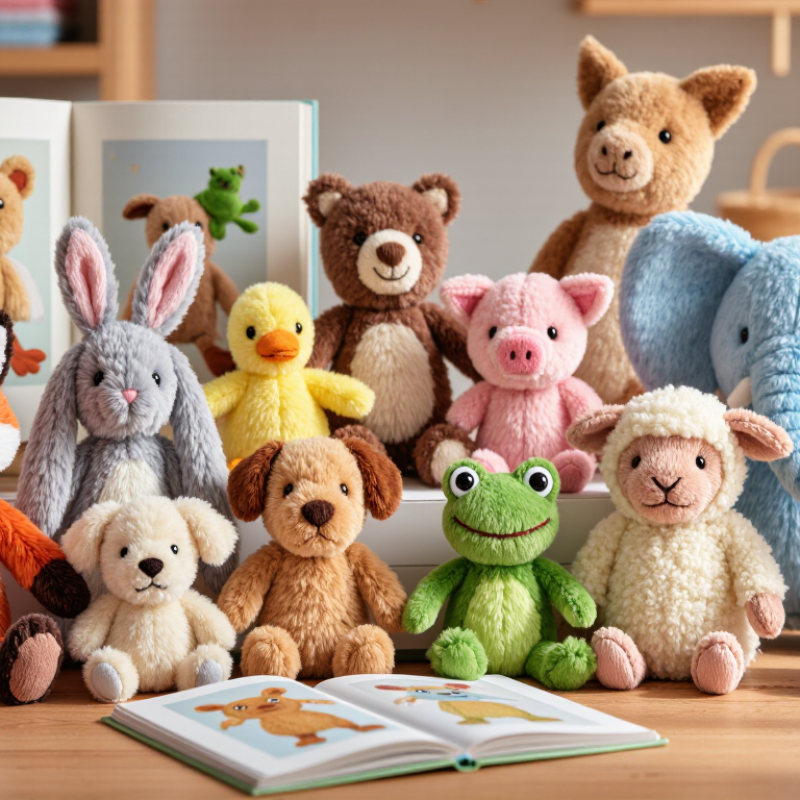
Top 10 Childrens Book Plush Toys Manufacturers in China

Understanding Children's Book Plush Toys and Their Market in China

Children’s book plush toys sit between reading, play, and gifting. A soft character can help a child connect a printed story with a familiar object: a stitched fox beside the matching page, or a small rabbit tucked into a reading corner. The appeal depends on more than cuteness. Children need plush toys that feel pleasant, hold their shape, and have features suited to their age. Parents also look for clear product information and consistent quality. Small details matter.

China offers a substantial toy market, but category figures should be read carefully. The China Toys and Juvenile Products Association reported domestic toy retail sales of about RMB 97.5 billion in 2024, up 7.9% year on year. This figure covers the broader toy market, not book-themed plush toys alone. It signals commercial scale, but does not prove that every story-linked product will find buyers. That distinction is easy to overlook.

For manufacturers, the opportunity lies in making the book and plush feel like one experience. Fabric, color, and character details should echo the illustrations, while seams and small parts deserve careful inspection. A toy that looks right beside a book but feels rough in a child’s hands misses the point. Nor does adding a plush automatically encourage reading. The story still has to earn attention.

How the Top 10 Manufacturers Are Selected and Evaluated

A credible shortlist starts with evidence, not polished catalog photos. Each manufacturer should provide factory details, production capacity, sample records, and recent test documentation. For plush toys, reviewers can inspect seam strength, loose components, embroidery density, fabric shedding, and stuffing consistency. Small differences matter. A crooked eye may signal weak process control, though one sample cannot prove a factory’s overall quality.

Safety deserves measurable checks. The U.S. Consumer Product Safety Commission’s 2022 toy-related injury report estimated 209,500 emergency-department visits among children under 15, underscoring why safety review cannot rely on verbal assurances. Evaluators should check applicable requirements, such as ASTM F963 in the United States or ISO 8124, and verify that reports match the exact materials and toy design. Ask for traceable batch records. Then compare the tested sample with production samples.

Commercial performance also needs scrutiny. Assess minimum order quantities, lead times, defect handling, customization controls, and communication during revisions. Request a pilot run and inspect randomly selected units under consistent lighting. A factory may meet a deadline once and miss the next one; that risk is easy to overlook. Rankings should therefore weigh documented safety, repeatable workmanship, transparent sourcing, and responsive problem-solving—not price or presentation alone. A useful scorecard still involves judgment. That should be stated plainly.

Profiles of 10 Leading Chinese Plush Toy Manufacturers

China’s children’s-book plush suppliers vary in how closely they connect fabric toys with printed stories. These ten manufacturer profiles compare practical strengths: custom character development, soft-book sewing, embroidery, small-batch sampling, and export experience. China’s toy exports reached about US$40.7 billion in 2023, down 12.2% year on year, according to the China Toy and Juvenile Products Association’s annual industry reporting. That figure covers toys broadly, not plush toys alone, so it should not be treated as a direct measure of this niche.

The profiles also examine details buyers can verify: fabric hand-feel, seam consistency, washable construction, color matching, and how clearly a factory documents sample revisions. Some suppliers focus on simple, sturdy shapes for toddlers; others handle layered details, sound elements, or book-and-toy sets. A neat catalog is not proof of reliable production. Even capable factories can miss a stitch or shade between samples and bulk orders. Ask for physical samples and compare them under natural light.

Tips: Request a pre-production sample, written material specifications, and close-up photos of seams and embroidery. Check whether quoted lead times include revisions. Small details matter. A soft page that turns easily can make the toy more inviting, while a stiff seam may frustrate little hands.

Top 10 Children’s Book Plush Toy Manufacturers in China

The headline states that the article profiles 10 Chinese manufacturers. This chart shows that count only; it does not compare individual manufacturers or indicate their performance.

Comparing Product Design, Safety Standards, and Customization Options

Choosing a Chinese manufacturer for children’s book plush toys means comparing more than a cute sample. Check facial embroidery, seam strength, pile length, and stuffing recovery after repeated squeezing. Small seams matter. Ask for material traceability, age grading, and test documents aligned with ASTM F963 or relevant EN 71 requirements. These standards cover areas such as mechanical and chemical safety, but a certificate alone cannot confirm every batch is consistent. The U.S. Consumer Product Safety Commission estimated 209,500 toy-related emergency-room injuries in 2022. Its report covers toys broadly, not plush toys alone.

That figure makes practical checks worthwhile: tug-test ears and tails, inspect loose fibers, and wash a sample before approving the design. Request a preproduction sample and keep it as a quality benchmark. Customization can include fabric choices, embroidered story details, labels, and packaging. Each change may affect lead time or minimum order quantities. Ask who owns the pattern files and how color matching is checked under consistent lighting. Not always. A low quote may exclude retesting after material substitutions, so request written change-control steps and batch inspection records.

Top 10 Childrens Book Plush Toys Manufacturers in China - Comparing Product Design, Safety Standards, and Customization Options

Supplier-neutral comparison guide. The entries below are key areas to evaluate—not ranked or identified companies. Applicable requirements depend on the toy’s design, intended age group, and destination market; request current test reports and confirm requirements with a qualified laboratory.

No. Manufacturer Evaluation Area Product Design and Materials Safety Standards and Evidence to Check Customization Options
01 Character and storybook interpretation Check whether sketches, reference art, and character proportions can be translated into a sewn plush prototype. Confirm the finished toy is assessed for its intended age group and target market; review the applicable mechanical and physical safety test report. Custom silhouette, facial expression, outfit, colors, and embroidered story details.
02 Fabric and color selection Common plush choices include polyester pile fabrics and woven or knitted textile details. Ask for material specifications and color samples. Request applicable chemical testing for the destination market and product. For the United States, relevant requirements may include CPSIA limits for lead and certain phthalates. Fabric type, pile length, color matching, printed panels, and contrasting textures.
03 Embroidery and facial features Embroidery can provide soft facial details; plastic eyes or other attached parts need particular attention on toys intended for young children. Ask how small parts, seams, and attachments are evaluated under the applicable toy-safety rules, including age-related requirements. Embroidered eyes and mouth, facial expression, thread colors, and placement.
04 Seams, closures, and construction Review seam design, closure method, reinforcement at stress points, and consistency between the approved sample and production units. Request mechanical and physical testing appropriate to the product and market, including checks relevant to seams, accessible filling, and attached components. Seam placement, shape, panel layout, internal construction, and access openings.
05 Filling and weight Ask for the filling material specification, fill distribution, and finished toy weight. Polyester fiberfill is a common plush-toy filling. Check that filling materials and the finished product meet applicable market requirements; request documentation that matches the production materials. Filling firmness, weight, soft or lightly weighted feel, and body shape.
06 Removable clothing and accessories Review accessory size, attachment method, and whether parts could become accessible during foreseeable use. Confirm that detachable pieces and small components are assessed for the intended age group under the relevant market rules. Removable outfits, scarves, bags, themed accessories, and coordinated sets.
07 Sound or electronic features If a toy includes a sound module, review the module, battery access, volume, and how the unit is enclosed in the plush body. In addition to applicable toy requirements, check relevant electrical, battery, and chemical requirements for the destination market. Recorded phrases, sound effects, or a removable sound module, subject to design and compliance review.
08 Size, age grading, and labeling Specify finished dimensions, intended age range, and whether the plush is designed as a toy, comfort item, or collectible. For the EU, assess applicable requirements under the Toy Safety Directive and relevant EN 71 standards. For the US, check applicable ASTM F963 and CPSIA requirements. Custom size, age-appropriate design details, sewn-in labels, and packaging text.
09 Sampling and production consistency Compare the approved pre-production sample with production units for shape, materials, color, stitching, and workmanship. Verify test reports identify the relevant product or representative construction and materials; confirm whether any design or material changes require reassessment. Prototype revisions, sample approval stages, color approval, and documented product specifications.
10 Packaging and private-label requirements Check packaging suitability for the toy and the information required for the intended sales market. Confirm required warnings, traceability details, and labeling with the importer or compliance specialist. US children’s products may require a tracking label under CPSIA. Custom packaging, hangtags, care information, multilingual text, and customer-provided artwork.

Key Considerations for Sourcing Plush Toys from China

When sourcing children’s book plush toys from China, assess the factory’s actual production experience, not just its catalogue. Ask how it handles character shapes, embroidered faces, and small sewn details. Request a pre-production sample made with the intended fabric and filling. A soft prototype can feel right but still lose shape after repeated squeezing.

Inspect seams, eye and nose attachments, and fabric shedding. Ask for documented safety test results relevant to your destination market, and confirm that the tested materials match the production order. Keep a sealed reference sample for comparison during manufacturing. Small details matter. A slightly different fabric pile can change the toy’s appearance and feel.

Clarify minimum order quantities, sampling fees, production lead times, and how defects are handled before paying a deposit. Request close-up photos of stitching and packaging, but do not rely on photos alone for critical checks. If possible, arrange an independent inspection before shipment. Communication can be imperfect, even with clear specifications, so use simple drawings, measurements, and written approval records. I would also leave room in the schedule for a revised sample; rushing this step often creates avoidable disappointment.

FAQS

What should buyers compare when choosing a plush toy manufacturer?

Compare fabric feel, seam consistency, embroidery, sampling options, and experience with soft books. A neat catalogue is not proof of reliable production.

How can I check a plush toy sample?

Squeeze it repeatedly and see whether the filling recovers. Tug the ears and tails, inspect loose fibers, and check seams closely. Small seams matter.

What documents should I request for safety checks?

Ask for relevant test documents, age grading, and material traceability. Confirm the tested materials match the production order.

Why is a pre-production sample important?

It lets you approve the intended fabric, filling, colors, and construction before bulk production. Keep a sealed reference sample for later comparison.

How can I assess color matching?

Ask how colors are checked under consistent lighting. Compare a physical sample with production materials under natural light when possible.

What should I clarify before paying a deposit?

Confirm minimum order quantities, sampling fees, lead times, and how defects are handled. Ask whether quoted timelines include sample revisions.

Are photos enough to approve stitching and packaging?

Photos can show close-up details, but they cannot replace physical checks. Photos are not enough. Consider an independent inspection before shipment.

What can affect customization and delivery timing?

Fabric changes, embroidered details, labels, and packaging may affect lead times or order quantities. Request written change-control steps and leave time for revised samples. I would not rush this part.

Conclusion

This article explores the market for Childrens Book Plush Toys in China, focusing on how soft, story-inspired toys can support imaginative play and appeal to young readers. It explains the criteria used to assess manufacturers, including production experience, design capabilities, material choices, quality control, and communication. The article also presents profiles of ten leading Chinese manufacturers, highlighting the kinds of products and services they offer without relying on brand comparisons.

Readers will find guidance on comparing product design, safety practices, and customization options such as character details, fabrics, colors, and packaging. The final section outlines practical sourcing considerations, including sample review, production timelines, order quantities, inspection arrangements, and clear specifications. Together, these topics offer a structured starting point for evaluating potential suppliers and choosing products that meet a project’s needs.

Amelia Sterling

Amelia Sterling

Amelia Sterling is a professional marketing specialist dedicated to helping businesses understand how thoughtful strategy, reliable products, and meaningful customer experiences work together to create lasting value. With a strong understanding of the company’s products, services, and market......