Expert advice, design tips, and manufacturing insights from 30+ years in custom stuffed animal creation.
Discover how top global brands bring custom plush characters to life with quality & safety testing.
Explore trends in eco-friendly fabrics, sensory therapy plushies, and custom brand giveaways.
Choosing a reliable China supplier for Custom Sequin Plush Toys requires more than comparing prices. Buyers must examine materials, workmanship, communication, and production controls. A polished product photo can hide uneven stitching or weak sequin attachment.
Details matter.
Experienced suppliers should explain their fabric choices, filling standards, sequin backing, and embroidery methods clearly. Soft polyester plush, secure seams, and child-friendly components support both comfort and durability. Buyers should also request a physical sample before approving bulk production. A sample reveals texture, color accuracy, zipper quality, and how sequins react to repeated handling.
China has a broad manufacturing base for customized plush products. However, factory capability can vary widely. A trustworthy supplier should provide clear production timelines, inspection procedures, packaging options, and documentation relevant to the target market. Independent quality checks may also reduce avoidable risks. Certifications are useful, but they should be verified rather than accepted at face value.
The best supplier is not always the cheapest one. Reliable communication often saves more money than an attractive initial quotation. Ask how the factory handles design changes, defective units, and delayed materials. These answers reveal practical experience.
No supplier is perfect.
Even a careful process may need adjustment after the first sample. Sequins can reflect light differently from digital artwork, and plush fabric may slightly change the final shape. Recognizing these limitations encourages realistic planning. This guide explores how to evaluate China’s top Custom Sequin Plush Toys suppliers with clearer standards, practical questions, and evidence-based judgment.
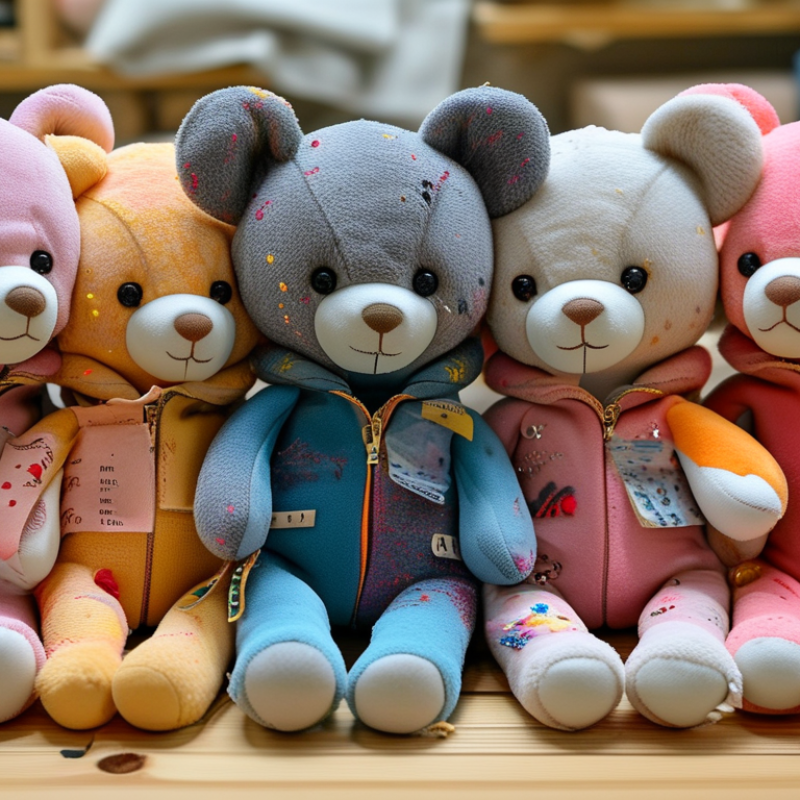
Custom sequin plush toys combine soft stuffed animals with reversible sequin fabric. Each sequin has two colored sides. When brushed upward or downward, the surface changes color or reveals a printed pattern.
The plush base usually contains polyester fiber filling and a short, soft outer fabric. The sequin panel may cover the ears, belly, paws, or entire front surface. Custom work can include animal shapes, character colors, embroidered eyes, fabric labels, and special packaging. A practical supplier should discuss artwork size, stitch density, fabric weight, and sample approval before production. These details affect softness, appearance, and durability.
In real production, small design choices matter. Large sequins create a stronger visual effect, but they may feel rougher. Smaller sequins feel smoother, yet their pattern can look less clear. I have found that simple graphics often perform better than crowded artwork. Not every sample looks perfect. Sometimes the filling is uneven near the seams, or a color appears different under factory lighting. Careful inspection can catch these issues. Suppliers should check loose threads, seam strength, sequin attachment, and accessible small parts. They should also review age grading and applicable toy-safety requirements for the target market. A reliable production process includes a physical sample, written specifications, and documented quality checks.
China Top Custom Sequin Plush Toys Supplier?
Why Choose a Chinese Sequin Plush Toy Supplier?
A Chinese sequin plush toy supplier can combine customization, production experience, and practical cost control. Many factories work with plush fabrics, reversible sequins, embroidery, stuffing, and child-safe components every day. This repeated experience helps teams understand how a design behaves after sewing, turning, and packing. A sketch may look attractive, but its sequin direction can affect comfort and appearance.
Production communication is another useful advantage. Buyers can usually discuss fabric samples, color references, stitching density, and packaging details directly with technical staff. A reliable supplier should provide pre-production samples, material information, inspection photos, and clear delivery updates. Ask for the factory’s quality procedures. Do not depend only on attractive catalog images.
Small details matter. Sequin edges should feel secure, seams need consistent tension, and stuffing should remain evenly distributed. Suppliers with established production networks may also source suitable fabrics and accessories more efficiently. This can support flexible quantities and custom shapes, although every project still needs careful confirmation.
Nothing is perfect.
Samples can reveal uncomfortable sequins, uneven embroidery, or colors that change under different lighting. A responsible supplier will discuss these problems instead of hiding them. Buyers should review samples, test handling, and record approved specifications before mass production. That extra step may feel slow, but it prevents expensive misunderstandings later.
Custom sequin plush toys begin with a clear visual plan. Designers choose the animal shape, fabric pile, sequin size, color, and touch direction. A reversible sequin panel can reveal silver, pink, or another hidden shade with one hand stroke. The first sample should show more than appearance. It must test stitching, filling balance, seam strength, and child-safe details.
According to Grand View Research, the global plush toys market was valued at about USD 7.3 billion in 2023. Meanwhile, Circana reported a 7% decline in global toy sales across tracked markets during 2023. These figures make reliable sampling more important. Suppliers cannot depend only on attractive photographs. They should provide material specifications, production records, and testing evidence aligned with applicable toy safety standards, such as ISO 8124.
The manufacturing process normally includes pattern cutting, embroidery, sequin attachment, sewing, stuffing, and final inspection. Technicians check whether sequins detach under repeated rubbing. They also inspect thread ends and zipper areas. Small defects matter. A slightly uneven filling can change the toy’s face and balance.
Some design decisions still need reflection. Dense sequins create stronger sparkle, but they may increase weight and production time. Very soft plush feels pleasant, yet it can hide weak seams. Experienced suppliers should explain these trade-offs before mass production. A careful pre-production sample, followed by documented corrections, is often more valuable than a rushed low quotation.
Typical production planning ranges for a custom sequin plush toy, shown in working days. Actual timing varies with character complexity, size, materials, sampling requirements, and order quantity.
The workflow usually moves from concept development and pattern engineering to sampling, material preparation, sewing, sequin attachment, quality inspection, and packing.
China Top Custom Sequin Plush Toys Supplier?
What Quality Standards Should Suppliers Meet?
A reliable custom sequin plush toy supplier must prove safety, consistency, and traceability. The U.S. Consumer Product Safety Commission reported about 231,700 toy-related emergency-room injuries involving children under 15 in 2023. That figure makes testing more than paperwork. It becomes a daily responsibility.
Suppliers should work against ASTM F963, EN 71, or ISO 8124, depending on the target market. Tests should cover flammability, heavy metals, chemical migration, seam strength, and small detachable parts. Sequins need special attention. Each piece should resist pulling, twisting, and repeated washing. Loose sequins can create choking risks. Embroidery edges should feel smooth, not sharp. Fabric dyes must remain stable after rubbing and moisture exposure. The factory should provide batch-matched laboratory reports, material declarations, and production records. A report from an old batch is not enough. That mistake happens.
Tips: Request pre-production samples, then inspect random cartons before shipment. Ask for pull-test photos and laboratory accreditation details. Check stuffing cleanliness and metal-detector records. Do not rely on a supplier’s certificate alone. Independent verification is safer, although it adds time and cost. I would also test the final decorated toy, not only the plain plush shell. Sequin density can change weight, seams, and safety performance. Quality control is never perfectly tidy. That is why documented corrective actions matter.
| Quality Dimension | Applicable Standard or Reference | Recommended Supplier Requirement | Verification Method | Target Status |
|---|---|---|---|---|
| Product Safety Classification | Applicable toy-safety rules in the destination market, such as ASTM F963, EN 71, or ISO 8124 | The supplier should identify the product age grade, intended use, destination market, and applicable mandatory requirements before production. | Review of product specifications, risk assessment, technical documentation, and an independent laboratory test plan. | Required before mass production |
| Mechanical and Physical Safety | ASTM F963-23, EN 71-1, or ISO 8124-1, depending on the destination market | Seams, eyes, noses, sequins, ribbons, and decorative parts should resist foreseeable pulling, twisting, tension, compression, and drop-related hazards. | Age-graded mechanical tests, seam-strength checks, pull tests for small parts, and visual inspection of sharp points and edges. | No hazardous detachment |
| Sequin Attachment | Mechanical safety requirements under the applicable toy standard | Sequins should be securely stitched or otherwise fixed according to the design specification. Loose, cracked, sharp-edged, or easily detachable sequins should not be accepted. | Sampling inspection, hand-pull checks, seam inspection, and applicable small-parts testing after conditioning. | Secure and smooth attachment |
| Small Parts and Choking Risk | ASTM F963 small-object requirements, EN 71-1, or ISO 8124-1 | Components that can become detachable small parts must be controlled according to the product’s age grading. Products intended for children under 3 require particularly strict evaluation. | Small-parts cylinder assessment, tension and torque tests, and post-test inspection. | Compliant with age grading |
| Flammability | ASTM F963 flammability requirements, EN 71-2, or ISO 8124-2 | Plush fabric, thread, filling, decorative materials, and surface treatments should meet the flammability requirements applicable to the destination market. | Testing by an accredited laboratory using the required method for textile and stuffed-toy components. | Pass applicable market test |
| Lead in Paints and Surface Coatings | United States CPSIA: generally 90 mg/kg maximum for lead in paint or surface coatings | Printed areas, painted parts, coatings, and metallic decorative finishes should be controlled through approved material specifications and supplier declarations. | Laboratory chemical analysis of representative painted, printed, or coated components. | ≤ 90 mg/kg where applicable |
| Lead in Accessible Substrate Materials | United States CPSIA: 100 mg/kg maximum total lead for accessible substrate materials | Accessible metal, plastic, synthetic, and other substrate components should be assessed when the product is intended for the United States market. | Representative-component testing using an accepted laboratory method and documented material traceability. | ≤ 100 mg/kg where applicable |
| Phthalates | United States CPSIA restrictions for specified children’s products; applicable limits are commonly 0.1% for listed phthalates | Soft PVC, coatings, synthetic leather, printed plastics, and other potentially plasticized components should be screened when relevant. | Laboratory chemical testing of high-risk plasticized materials and review of raw-material declarations. | Meet destination-market limit |
| Restricted Chemicals | EU REACH restrictions and Candidate List obligations; market-specific chemical regulations | Dyes, pigments, adhesives, coatings, metallic finishes, plastics, and textile treatments should be reviewed for restricted substances, including relevant azo dyes and SVHC requirements. | Current supplier declarations, bill-of-material review, risk-based laboratory screening, and updated regulatory monitoring. | Documented compliance required |
| Textile Colorfastness | Applicable textile test methods, such as ISO 105 series methods | Sequin fabric, plush fabric, embroidery, and printed areas should resist unacceptable color transfer during rubbing, washing, perspiration, or saliva-related testing when required. | Dry and wet crocking tests, laundering tests, perspiration tests, and color-change evaluation. | No unacceptable bleeding or transfer |
| Needles, Wires, and Sharp Edges | Mechanical and physical safety provisions in ASTM F963, EN 71-1, or ISO 8124-1 | No broken needle fragments, exposed wire ends, sharp sequin edges, protruding staples, or hazardous hard points should remain in the finished toy. | Needle-control records, metal detection where appropriate, visual inspection, and tactile examination of finished units. | No accessible sharp hazards |
| Stuffing and Internal Materials | Applicable toy-safety, hygiene, and chemical requirements in the destination market | Filling should be clean, dry, evenly distributed, and free from foreign matter. Internal materials should be compatible with the product’s safety and labeling requirements. | Incoming-material inspection, foreign-matter checks, moisture or cleanliness controls, and production-line sampling. | Clean, secure, and evenly filled |
| Seam and Closure Integrity | Applicable mechanical safety requirements and approved product specification | Stitched seams, zippers, hook-and-loop closures, and openings should withstand foreseeable use without exposing stuffing or creating detachable hazards. | Seam inspection, strength sampling, closure-cycle checks, and post-test examination. | No opening or stuffing leakage |
| Production Consistency | Approved golden sample, technical specification, and documented quality-control plan | Color, dimensions, sequin layout, embroidery position, facial features, filling weight, and packaging should remain consistent with the approved sample. | Incoming quality control, in-process inspection, final inspection, measurement records, and AQL-based sampling where agreed. | Within approved tolerances |
| Traceability and Records | Customer quality agreement and destination-market compliance documentation | The supplier should maintain batch numbers, material sources, production dates, inspection results, test reports, corrective actions, and retained samples. | Document review, batch-record audit, certificate verification, and retained-sample comparison. | Complete and retrievable records |
| Packaging and Labeling | Destination-market labeling, packaging, warning, and tracking-label requirements | Age grading, warnings, care information, origin details, tracking information, and packaging materials should match the destination-market requirements and approved artwork. | Artwork approval, packaging inspection, barcode or tracking review, and regulatory-label verification. | Accurate and market compliant |
| Pre-Shipment Release | Customer-approved inspection plan and applicable statutory requirements | Shipment should be released only after required safety reports, production inspection results, packaging approval, and corrective-action verification are complete. | Final inspection, document checklist, random sampling, photo records, and approval by the designated quality representative. | Release only after approval |
| Note: Applicable limits and test methods depend on the destination market, product age grading, materials, and current regulations. Suppliers should confirm the latest legal requirements with an accredited testing laboratory before production and shipment. | ||||
Selecting the right custom sequin plush toy supplier requires more than comparing prices. A reliable supplier should understand your character design, fabric choice, sequin direction, stitching details, and packaging needs. Ask for production photos, material specifications, and previous sample experience. Skilled teams can explain how sequin fabric affects softness, weight, and durability.
Request a physical prototype before placing a large order. Inspect the eyes, seams, stuffing, embroidered details, and sequin attachment. Gently brush the surface and check for loose pieces. It may reveal problems that digital images hide. Confirm the supplier’s quality process, product testing, factory capacity, and communication schedule. Clear answers matter. Vague promises do not. Also review their ability to meet applicable toy safety and labeling requirements in your target market.
Tips: Prepare a detailed specification sheet with dimensions, colors, fabric references, logo placement, and tolerance limits. Ask how defects are recorded and corrected. Confirm minimum order quantities, sample fees, lead times, shipping terms, and revision policies in writing. A low quotation can become expensive after repeated changes. Remember, no supplier is perfect; even experienced teams may misunderstand a visual instruction. Regular approvals and honest feedback reduce that risk. Choose a partner who welcomes questions, documents decisions, and accepts responsibility when the sample needs improvement.
They combine soft stuffed animals with reversible sequin fabric. Brushing the sequins changes the visible color or reveals a pattern. The fabric may cover the belly, ears, paws, or front surface. Samples can surprise.
Each sequin has two colored sides. Brushing upward shows one side, while brushing downward shows the other. Direction matters. The surface can feel slightly rough with larger sequins.
Custom options may include animal shapes, colors, embroidered eyes, fabric labels, and packaging. Provide artwork size, stitch density, fabric weight, and logo placement. Simple graphics often appear clearer than crowded designs.
Large sequins create a stronger visual effect but may feel rougher. Smaller sequins feel smoother, though detailed patterns can look less clear. Choose based on appearance, touch, and intended use.
Digital images may hide uneven filling, loose threads, or weak seams. Brush the prototype gently and inspect the sequin attachment. Check the eyes, embroidery, stuffing, and accessible small parts. Pictures are not enough.
Ask for production photos, material specifications, sample experience, and quality procedures. Confirm factory capacity, testing practices, communication timing, and packaging abilities. Vague promises are warning signs.
Include dimensions, colors, fabric references, artwork placement, packaging details, and tolerance limits. Record minimum order quantities, sample fees, lead times, shipping terms, and revision policies. Written details prevent costly misunderstandings.
Inspect seam strength, filling distribution, loose threads, sequin attachment, fabric weight, and color consistency. Factory lighting can change how colors appear. A color may look different than expected.
Review applicable toy-safety and labeling requirements for the target market. Check accessible small parts and suitable age grading. Requirements differ by location, so confirm them before production. Do not assume compliance.
Custom Sequin Plush Toys combine soft, huggable materials with reversible or shimmering sequin surfaces, creating playful products that can be customized in shape, color, size, patterns, and packaging. A reliable Chinese supplier can offer flexible production capabilities, competitive pricing, efficient sourcing, and strong experience in handling customized designs. From concept development and artwork review to sample creation, fabric cutting, sewing, stuffing, sequin attachment, and final inspection, each stage should be carefully managed to achieve consistent quality and visual appeal.
When selecting a supplier, buyers should evaluate material safety, stitching strength, sequin attachment, color accuracy, production capacity, communication, sampling procedures, and delivery reliability. Suppliers should also follow applicable toy safety and quality requirements for the target market, provide clear inspection records, and support practical customization options. The right partner will combine creative support, transparent processes, stable quality control, and responsive service to turn an original plush toy concept into a safe, attractive, and market-ready product.