Expert advice, design tips, and manufacturing insights from 30+ years in custom stuffed animal creation.
Discover how top global brands bring custom plush characters to life with quality & safety testing.
Explore trends in eco-friendly fabrics, sensory therapy plushies, and custom brand giveaways.
Why Buy Bulk Custom Stuffed Animals for Your Brand?
A well-designed plush toy can turn a simple logo into something customers remember. Bulk Custom Stuffed Animals give brands a physical, approachable way to express personality, launch campaigns, and strengthen customer relationships. A soft mascot on a child’s shelf, office desk, or event table may continue promoting your brand long after the original interaction.
From practical sourcing experience, successful plush programs begin with a clear design brief. Teams should confirm dimensions, fabric texture, filling, stitching, colors, labels, and packaging before production. A small prototype can reveal uncomfortable seams, weak details, or colors that look different under indoor lighting. The first sample is rarely perfect. That is normal.
Quality matters more than novelty. Reliable manufacturers should provide material information, production samples, inspection procedures, and clear communication throughout the order. Brands should also consider age suitability, durability, cleaning instructions, and applicable product-safety expectations for their target market. Documentation does not replace careful judgment, but it makes decisions easier to verify.
There is also a budget reality. Large orders may reduce the unit price, yet unused inventory can become expensive storage. Forecast demand carefully. Some companies order too many units because the discount feels attractive. That assumption can be costly. A phased campaign, seasonal packaging, or several approved designs may create better flexibility than one oversized order. When planning is thoughtful, Bulk Custom Stuffed Animals can become more than promotional merchandise; they can become durable brand ambassadors with genuine emotional value.
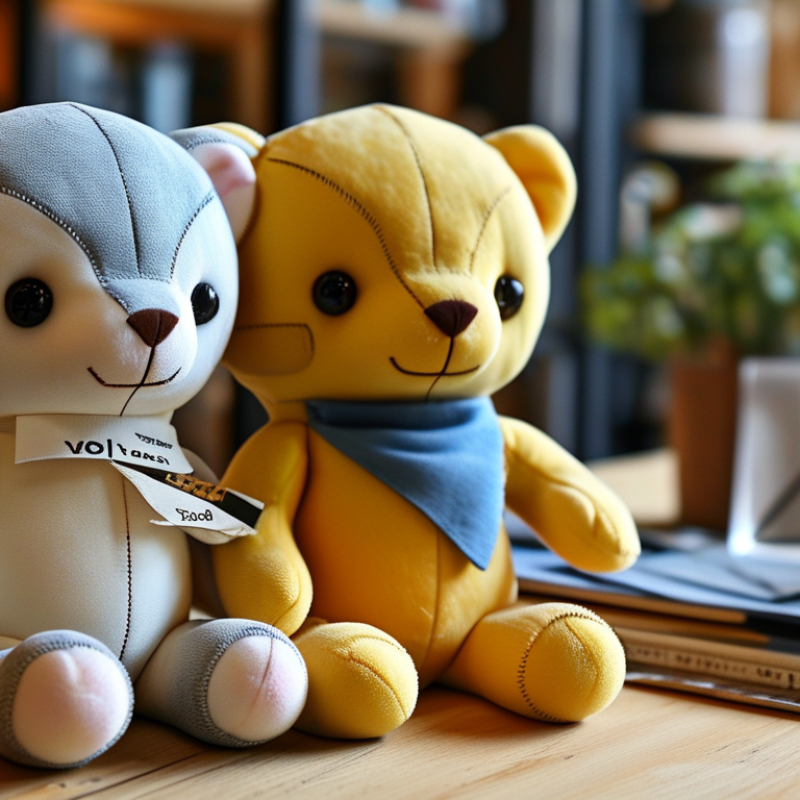
Grand View Research forecasts the global plush toys market to grow at an 8.5% CAGR from 2024 to 2030. This projection reflects rising demand for comforting, giftable, and collectible soft toys. The market looks promising, but growth is not automatic. Circana’s 2023 U.S. toy industry review reported an 8% sales decline, reminding buyers that forecasts can hide short-term pressure. Bulk custom stuffed animals can turn that pressure into a testable opportunity. A soft mascot on a desk feels more personal than a printed flyer. Custom embroidery, textured fabrics, and compact packaging can also improve recall. Still, buying too much too early is a common mistake. Overstock is expensive.
In practical sourcing work, teams should connect order volume with campaign timing. Start with a realistic sales estimate, not an optimistic wish. Check sample stitching, filling consistency, fabric softness, and color accuracy. Ask suppliers for documented safety testing and age-appropriate specifications. These details support trust and reduce avoidable rework. A forecast is useful, but it cannot replace customer feedback.
Tips: Request a pre-production sample before confirming bulk quantities. Compare two or three quotations using the same specifications. Keep a small reserve for replacements. Review storage space, shipping time, and seasonal demand before approving the final purchase.
Why Buy Bulk Custom Stuffed Animals for Your Brand?
According to a 2023 PPAI figure, 85% of people remember promotional advertisers. That statistic matters because memory supports recognition after an event ends. A custom stuffed animal gives that memory a physical shape. Its soft texture, stitched detail, and friendly design can stay on a desk or child’s shelf. This is more lasting than a quick digital impression.
Bulk purchasing can also improve consistency and control costs. Teams can review one approved sample before producing the full order. Check the fabric, seams, filling, colors, and packaging carefully. Small defects become expensive when multiplied across hundreds of units. Safety labeling and age guidance also require attention. These details support responsible promotional planning.
The strongest result comes from a useful design, not a crowded logo. A small embroidered mark may look better than oversized printing. Choose a size that travels easily. Match the animal to the campaign’s audience and setting. At a community event, a washable plush toy may be practical. At a professional gathering, a compact desk version may feel more appropriate. Still, 85% is not a guarantee of success. Recall depends on relevance, quality, and timing. Some recipients may remember the item but forget the message. That weakness deserves honest testing before a large production run.
Buying bulk custom stuffed animals can reduce unit cost, but the lowest quote is rarely the full decision. MOQ often sets the entry point. Five hundred units may suit a test, while 5,000 units can unlock better pricing. Ask for a sample before approving production. Check stitching, fabric feel, embroidery, filling, packaging, and color consistency. Small defects multiply at scale.
Compare unit cost against landed cost, including sampling, tooling, freight, storage, and inspection. A $4 plush can become $5.20 after delivery and handling. That difference changes your margin. Inventory also needs a time estimate. If 2,000 pieces sit for six months, cash is locked and storage risk grows. Slow-moving designs may need discounts, weakening the original calculation. I have seen attractive bulk quotes fail because demand was treated as certain. It is not.
Estimate ROI with realistic sales, not optimistic traffic. Use this model: gross profit minus total project cost, divided by total project cost. Test the result under lower sales and delayed launches. Smaller MOQ may cost more per piece, yet preserve cash and allow design changes. Larger MOQ works better when demand, capacity, and replenishment timing are documented. Keep records of defect rates and reorder speed. Numbers reveal patterns, but they do not replace judgment.
Buying bulk custom stuffed animals can strengthen a brand’s identity, but customization must begin with practical controls. Material selection affects comfort, durability, and production consistency. Soft polyester plush feels gentle, while recycled fibers may require closer inspection. Ask for fabric samples before approving large quantities. Small differences matter.
A reliable supplier should provide safety test reports for every relevant component. Check the plush fabric, filling, dyes, stitching, eyes, and attached accessories. Testing should match the product’s intended age range and sales markets. Independent laboratory documentation adds useful verification. Still, paperwork is not enough. Request production samples and inspect seams, loose threads, odor, and stuffing recovery by hand.
Brand controls should cover color references, embroidery size, label placement, packaging, and acceptable defects. Clear approval records reduce costly misunderstandings during mass production. In one sample review, we found the embroidered face slightly uneven after comparing it with the approved file. It was fixable. The first sample was too stiff. That taught us to test softness after washing, not only before shipment. Bulk purchasing rewards preparation, yet it can also magnify a small mistake across thousands of toys. Keep a signed specification sheet, retain a sealed reference sample, and schedule inspections before shipment. This approach supports consistent quality without limiting creative character.
| Control Area | Specification or Data Dimension | Recommended Bulk Requirement | Verification Method | Brand Benefit |
|---|---|---|---|---|
| Materials | Outer fabric | Specify polyester plush, cotton, or another approved textile, including fiber composition, color, texture, and surface finish. | Review material specifications, color references, and a pre-production sample. | Creates consistent hand feel, appearance, and product positioning across the full order. |
| Materials | Filling material | Use clean, evenly distributed polyester fiberfill or another declared filling material with no unexplained substitutions. | Confirm the filling specification and inspect samples for compression, lumps, and recovery. | Supports consistent softness, shape retention, and product quality. |
| Materials | Small components | Define the type, size, attachment method, and placement of eyes, noses, embroidered details, ribbons, and accessories. | Conduct visual inspection, attachment checks, and applicable tension or torque testing. | Reduces variation and helps control choking and detachment risks. |
| Materials | Dyes and surface treatments | Require colorfast materials and declare printing, embroidery, coatings, adhesives, or other chemical treatments. | Check supplier documentation and use applicable chemical and colorfastness testing. | Protects visual consistency and supports regulatory documentation. |
| Safety Tests | United States toy safety | For products marketed as toys in the United States, evaluate applicable requirements under 16 CFR Part 1220 and ASTM F963, as incorporated by the Consumer Product Safety Improvement Act. | Use an appropriately accredited laboratory and retain test reports for the production version. | Provides documented evidence for market access and product-safety review. |
| Safety Tests | European toy safety | For products marketed as toys in the European Union, assess applicable EN 71 requirements and chemical restrictions under REACH. | Complete relevant mechanical, flammability, and chemical evaluations based on the product design. | Supports conformity assessment and responsible distribution in the EU market. |
| Safety Tests | Mechanical and physical hazards | Evaluate seams, attachments, accessible components, sharp points, sharp edges, and stuffing containment. | Perform age-grading review, seam inspection, pull testing, and other tests required by the applicable standard. | Helps identify foreseeable hazards before mass production and shipment. |
| Safety Tests | Flammability | Assess the fabric, filling, and finished product against the flammability requirements applicable to the destination market. | Submit representative production samples to a qualified testing laboratory. | Improves safety assurance and reduces the risk of non-compliant shipments. |
| Brand Controls | Shape and dimensions | Lock the approved pattern, finished dimensions, tolerances, embroidery placement, and accessory positions. | Use an approved golden sample and a documented pre-shipment inspection checklist. | Maintains recognizable character design and consistent shelf presentation. |
| Brand Controls | Color management | Define approved color references, acceptable shade tolerance, and separate standards for fabric, thread, print, and packaging. | Compare production samples with approved references under consistent lighting conditions. | Preserves visual identity across repeat bulk orders. |
| Brand Controls | Labeling and packaging | Specify permanent labels, age grading, care instructions, country-of-origin marking, warnings, barcode placement, and packaging artwork as applicable. | Approve digital proofs and inspect printed samples before production release. | Reduces labeling errors and supports retail or promotional distribution requirements. |
| Bulk Purchasing | Quality consistency | Use written acceptance criteria for dimensions, stitching, embroidery, stains, loose threads, odor, packaging, and cosmetic defects. | Apply a documented sampling inspection plan appropriate to order size and risk. | Turns subjective expectations into measurable quality controls. |
| Bulk Purchasing | Production approval points | Require approval of the prototype, pre-production sample, first production articles, and final packed goods. | Record approvals, revisions, inspection results, and corrective actions. | Helps prevent an approved design from changing during mass production. |
| Bulk Purchasing | Traceability | Maintain records for material lots, production dates, inspection results, test reports, and packaging versions. | Use batch or lot identification linked to production and shipment documents. | Enables faster investigation and more targeted corrective action if an issue occurs. |
| Bulk Purchasing | Cost and repeatability | Finalize specifications before volume production and use the same approved materials, patterns, and inspection criteria for repeat orders. | Compare each repeat order with the approved specification and prior inspection records. | Bulk purchasing can improve production efficiency while preserving controlled quality. |
Bulk custom stuffed animals can simplify procurement, but volume does not replace technical control. For the United States, CPSIA requires children’s products to meet applicable safety rules, including ASTM F963 toy requirements and third-party testing. In Europe, EN 71 covers mechanical and physical properties, flammability, and chemical migration. A responsible supplier should provide material declarations, test reports, production samples, and traceable batch records. Check the fabric, embroidery, stuffing, eyes, seams, and packaging separately. Tiny parts are not tiny risks.
Quality control should follow clear checkpoints. Inspect the first sample, pre-production materials, mid-production units, and finished cartons. AQL sampling can support consistency, but it cannot replace judgment. The U.S. Consumer Product Safety Commission has repeatedly identified stuffed toys among product categories requiring careful attention to seam strength, filling access, and small components. Packaging also deserves a measured plan. The World Bank’s What a Waste 2.0 report projects global municipal waste could reach 3.40 billion tonnes annually by 2050, making right-sized cartons and reduced plastic increasingly practical. Lead times need similar discipline. Add time for testing, corrective samples, factory holidays, and port delays. A perfect forecast is fiction. I still prefer a written buffer over a rushed shipment. Bulk purchasing works best when compliance, QC, packaging, and delivery dates are managed as one procurement system.
A 2023 industry figure reported that 85% of people remembered promotional advertisers. A soft toy gives that memory a physical form. Its texture, stitched details, and friendly shape may remain visible on a desk or shelf. Recall is not guaranteed.
Request one physical sample first. Inspect the fabric, seams, filling, embroidery, colors, and packaging. Look closely at loose threads and uneven stitching. Small defects become costly across hundreds of pieces.
A smaller order may cost more per item. It can preserve cash and allow design changes. A larger order may offer better pricing. However, demand must be supported by records, not hope.
Include sampling, tooling, freight, storage, inspection, and handling. A $4 item might reach $5.20 after delivery. That difference can reduce your margin quickly. The first quote is incomplete.
Match the quantity with documented demand and replenishment timing. Two thousand pieces stored for six months can lock up cash. Storage space and slow-moving designs create additional risk. I would rather miss a little demand than fill a warehouse blindly.
Use a compact size for travel and desk placement. A small embroidered mark may look cleaner than oversized printing. Choose the animal for the audience and event setting. A washable toy may suit a community event.
Review safety labeling, age guidance, filling security, and packaging instructions. Check whether seams remain closed after gentle handling. Do not treat these details as decoration. They support responsible distribution.
Use gross profit minus total project cost, divided by total project cost. Include realistic sales, delayed launches, and weaker traffic. Compare the result under lower-demand conditions. My first calculation might be too optimistic. That is worth correcting.
Bulk Custom Stuffed Animals offer a practical way to build brand recognition while meeting growing demand in the plush toy market, which is forecast to expand at an estimated 8.5% CAGR from 2024 to 2030. Promotional products also deliver strong recall value, with research indicating that 85% of recipients remember the advertisers associated with useful branded items. Buying in bulk can reduce unit costs, improve profit potential, and create a consistent supply for events, retail programs, and customer campaigns. However, businesses should carefully balance minimum order quantities, storage capacity, inventory turnover, and expected return on investment.
Effective procurement begins with clear customization standards, including fabric selection, filling, colors, embroidery, labels, and packaging. Each product should also meet appropriate safety expectations through material reviews, age grading, and required testing. A reliable production plan should address CPSIA and EN 71 requirements where applicable, sample approval, quality control inspections, realistic lead times, and secure packaging. With these controls in place, bulk purchasing can deliver memorable, safe, and consistent promotional products without sacrificing operational efficiency.