

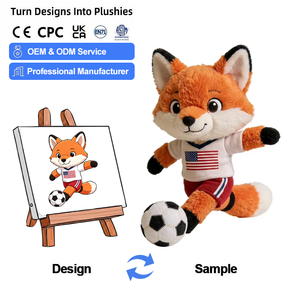

Industry Engineering & Regulatory Compliance for CE Certified Plush Backpacks
In the global toy and juvenile product manufacturing sector, procuring CE certified plush backpacks requires a rigorous understanding of structural integrity, material safety, and multi-jurisdictional compliance frameworks. Wearable plush products occupy a unique regulatory intersection: they are classified both as functional storage accessories and as soft toys intended for children under 14 years. Consequently, direct-to-retail importers, brand licensors, and institutional buyers must partner with experienced manufacturers capable of executing technical compliance without sacrificing design aesthetic or ergonomic comfort.
Senior Procurement Executive Note: The European Union Toy Safety Directive (2009/48/EC) mandates that any product exhibiting clear play value—such as a stuffed animal backpack or mascot bag—must fully satisfy CE Marking standards before customs clearance across all EU member states. Non-compliant imports face immediate REX/RAPEX market recalls, confiscation, and severe financial penalties.
Technical Breakdown of CE & EN 71 Harmonized Standards
Achieving authentic CE certification for plush backpacks entails rigorous laboratory testing across three core directives governed by the European Committee for Standardization (CEN):
EN 71-1: Mechanical & Physical Safety
Evaluates seam strength, pull forces on plastic eyes/zipper pulls (must withstand >90 Newtons tension), strap loop entrapment parameters, and sharp edge prevention under heavy mechanical strain.
EN 71-2: Flammability Protection
Regulates maximum flame spread rates on plush pile fabrics, faux furs, and internal stuffing (polyester fiberfill). Premium materials must exhibit flame propagation lower than 30 mm/s to prevent ignition hazards.
EN 71-3: Migration of 19 Heavy Metals
Strict chemical analysis testing the migration limits of toxic elements including Lead, Cadmium, Organotin, Chromium VI, and Barium in dyed velboa fabrics, screen prints, and metallic hardware.
Material Engineering & Structural Ergonomics
A plush backpack is more than a stuffed toy with shoulder straps; it is an engineered piece of soft goods. During bulk OEM/ODM manufacturing, our engineering team focuses on three key technical dimensions:
- Seam Pull Tension & Reinforcement: Standard plush toys utilize single-stitch lock patterns. Wearable plush backpacks integrate double-needle lock stitching paired with internal webbing reinforcement at strap stress points to withstand repeated dynamic loading over 15 kg.
- Ergonomic Load Distribution: Strap geometry must account for juvenile spinal safety. We utilize high-density closed-cell EVA foam padding encased in breathable sandwich mesh fabrics to mitigate shoulder pressure and regulate heat dissipation.
- Zipper Hardware Integrity: Zippers represent a major failure point and choking risk. We exclusively specify custom nylon coil zippers equipped with auto-lock sliders and oversized fabric pulls tested for zero lead content and high torsional strength.
Technical Specification Matrix: Standard Plush vs. Enterprise CE Certified Plush Backpacks
| Quality Benchmark | Standard Commercial Plush | Enterprise CE Certified Plush Backpack | Compliance Standard |
|---|---|---|---|
| Stitch Tensile Strength | 35 N – 50 N | > 90 N (Reinforced Double-Stitch) | EN 71-1 Section 8.4 |
| Fabric Heavy Metals | Unverified / Basic Testing | 100% Passed (19 Element Migration) | EN 71-3 / REACH Annex XVII |
| Zipper Pull Retention | Standard Crimp | High-Tension Lock Slider | ASTM F963-17 / CPSIA |
| Stuffing Fiber Quality | Mixed Recycled Off-cuts | 100% Virgin 7D Hollow PP Cotton | ISO 8124 / OEKO-TEX 100 |
| Factory Auditing | Uncertified Workshop | BSCI, SMETA, ISO9001, Disney FAMA | International Audit Directives |
Future Procurement Trends in the Global Plush Backpack Market (2025–2030)
As global consumer expectations evolve around sustainability and technological integration, B2B buyers must anticipate emerging supply chain shifts when selecting custom plush manufacturers:
1. Sustainable & Recycled Eco-Plush (GRS Certified)
Leading brands are transitioning from virgin polyester to GRS (Global Recycled Standard) certified post-consumer rPET fabrics. Every plush backpack crafted from rPET diverts an average of 12 plastic bottles from ocean landfills, providing a compelling eco-friendly marketing narrative.
2. Smart Interactive Plush & NFC Integration
Modern mascot backpacks are incorporating embedded NFC chips, sound chips, or micro-Bluetooth modules. These allow wearers to unlock digital rewards, verify brand authenticity via smartphone scans, or play custom audio clips for interactive promotional events.
3. Blind-Box & Collectible Plush Bags
Driven by global collectible crazes, mini plush backpacks designed as blind-box items are capturing immense retail market share. Precision prototyping and consistent quality control are essential to ensure uniform dimensions across collectable product lines.
Supply Chain Risk Mitigation Strategy: To avoid seasonal inventory delays, global enterprise buyers are increasingly adopting agile 3D digital sampling. Our digital pattern engine creates photorealistic 3D CAD renders prior to physical mold creation, shortening pre-production sample timelines by over 60%.
End-to-End OEM/ODM Manufacturing Workflow
From initial hand-drawn sketch to global door-to-door delivery, our 5-stage manufacturing process guarantees precision execution for high-volume custom plush orders:
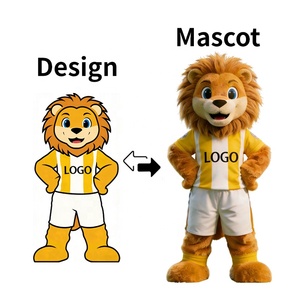
Phase 01: Concept & 3D Rendering
Our design engineers convert vector artwork or rough sketches into precise 3D digital plush patterns, selecting optimal fabric weights, embroidery thread specs, and internal volume calculations.
Phase 02: Physical Prototyping
Master pattern makers cut and sew physical prototypes within 7 to 10 days. Clients receive high-resolution imagery and physical samples with unlimited revisions until 100% sign-off.
Phase 03: Lab Certification
Pre-production samples are submitted to accredited third-party laboratories (SGS, TUV, Intertek) to obtain CE, EN71, and ASTM test reports prior to mass fabric cutting.
Phase 04: Automated Mass Production
Computerized laser cutting guarantees 0.1mm pattern accuracy. High-speed embroidery machines and automated stuffing injectors produce bulk volume under strict AQL 2.5 quality control.
Phase 05: Metal Detection & Logistics
Every finished item passes through double-channel needle detector machines to guarantee zero broken metal fragments. Products are vacuum-packed and shipped worldwide via DDP air or ocean freight.