Turnkey Custom Mascot & Packaging Export Solutions
Explore our premier lineup of OEM/ODM plush mascot costumes, engineered for global export with compliant retail-ready packaging and robust transport protection.
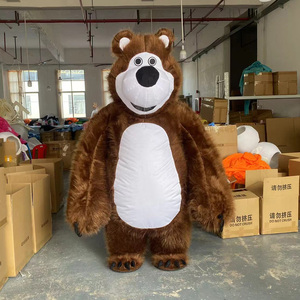
Wholesale in Stock Brown and Dark Brown Martha Bear Plush Mascot Costume for Unisex 14 Years & up Party Use
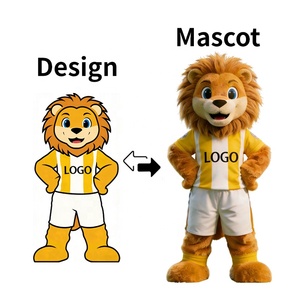
Factory Direct Custom Mascot Costume Walkable Lion Plush Character Suit OEM ODM Sports Team & Event Costume EN71 ASTM
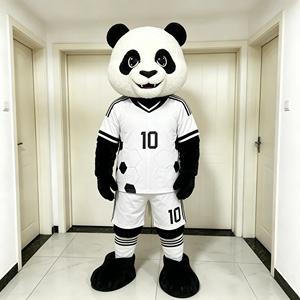
Leehom Customized Foam Mascot High Quality Plushie Customized Mascot Company Logo Anime Stuffed Plush Toys Dolls Customization
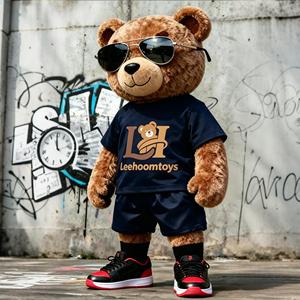
Leehom Customized Foam Mascot Hot Sale Cartoon Character Costume Cartoon Costume Show Performance Costume
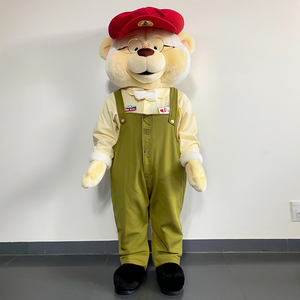
Shengye Factory Wholesale Cheap Price Custom Glasses Teddy Bear Fur Plush Mascot for Cartoon Character Display Mascot Costumes
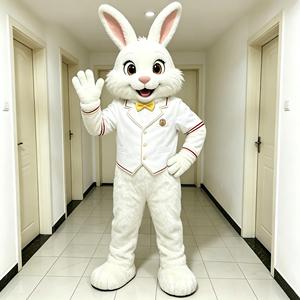
Leehom Customized Foam Mascot Soft Plush Adult Rabbit Mascot Costume Cosplay Luigi Walking Character Outdoor Advertising
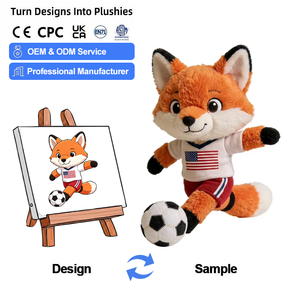
Customizable Fox Mascot Plush Toys Factory OEM ODM Wholesale Soft Stuffed Animal High Quality Plushie for Promotional Gifts
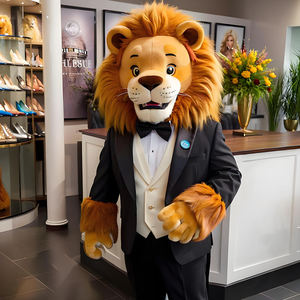
Shengye Factory Custom Professional Cartoon Design Adult Soft Plush Mascot Manufacture Lion Polar Bear Mascot Costume For Sale
Architecting Superior Toy Packaging & Manufacturing Solutions
Building on over three decades of operational excellence through The Beverly Hills Teddy Bear Company network, we merge state-of-the-art Chinese manufacturing efficiencies with rigorous Western compliance and structural engineering.
End-to-End Regulatory Compliance
Every structural design, window film (RPET/PET), and ink formula passes strict third-party lab safety testing. We comply fully with ASTM F963, EN71 Parts 1-3, REACH, and CPSIA standards to guarantee frictionless global clearance.
Turnkey OEM & ODM Capabilities
From 2D concept vectoring and structural die-line prototyping to mass offset printing and automated box assembly, we deliver unified plush toy and packaging solutions under one centralized quality assurance protocol.
Freight & CBM Optimization
Our packaging engineers specialize in Volumetric Weight Reduction. By custom-engineering collapse-flat boxes and vacuum-compression master cartons, we trim international ocean and air freight costs by up to 32%.
The Strategic Guide to Sourcing Toy Packaging from China
In the hyper-competitive global retail landscape, toy packaging is no longer merely a protective container; it is the primary vector for shelf conversion, brand storytelling, and consumer unboxing experiences. As global brands navigate evolving environmental mandates, volatile shipping tariffs, and shifting consumer expectations, selecting the right China-based wholesale toy packaging supplier and exporter becomes a paramount strategic decision.
"Superior packaging engineering bridges the gap between manufacturing efficiency, structural durability during transit, and impulse sell-through at retail." — Strategic Insights from Beverly Hills Teddy Bear Manufacturing Network
1. Operationalizing the P.R.I.C.E. Manufacturing Philosophy
Navigating cross-border toy supply chains requires a disciplined manufacturing framework. Our operations adhere strictly to the proprietary P.R.I.C.E. Model, designed to safeguard client margins and brand integrity:
- Product: Engineering high-impact, retail-ready structural packaging that enhances product protection while driving point-of-sale sell-through.
- Reputation: Upholding unwavering transparency, ethical labor (BSCI audit compliance), and strict IP protection across all OEM/ODM projects.
- Innovation: Pioneering eco-friendly substrate integration, FSC-certified boards, soy-based inks, and high-clarity RPET windows.
- Collaboration: Working side-by-side with brand management teams to optimize master-carton cube utilization and minimize landed cost-per-unit.
- Execution: Ensuring 100% on-time delivery with zero-defect quality control validated by third-party testing protocols.
2. Comprehensive Packaging Taxonomy for Plush & Toy Categories
Different toy categories demand distinct structural characteristics, sightlines, and touch-points. Below is a comparative engineering analysis of primary wholesale packaging styles exported from China:
| Packaging Architecture | Primary Material Substrates | Key Structural Features | Target Toy Category |
|---|---|---|---|
| Display Window Boxes | 350–400 GSM CCNB + RPET Film Window | Maximum product visibility, internal blister inserts, high graphic gloss finish. | Plush Mascots, Action Figures, Collectibles |
| Touch-and-Feel Cutout Boxes | Heavy-Duty E-Flute Corrugated Cardboard | Open tactile window, reinforced corner crush resistance, anti-theft tie-downs. | Interactive Plush, Sensory & Sound Toys |
| Blind Box & Collector Cylinders | Rigid Paper Tube + Tamper-Evident Foil Bag | Unboxing surprise factor, stackable retail footprints, premium foil stamping. | Mini Plush Collectibles, Blind Box Lines |
| Shipper-Ready E-Commerce Mailers | Single/Double Wall B-Flute Corrugated | Drop-test certified (ISTA 3A), self-sealing adhesive strips, zero plastic wrap. | Direct-to-Consumer (D2C) Bulk Toy Orders |
3. Future B2B Procurement Trends (2025–2030 Horizon)
As procurement directors and brand managers source toy packaging from China, several micro and macro trends are redefining procurement benchmarks:
A. Rapid Transition to Circular Materials & Plastic Elimination: Driven by stringent EU directives (such as the EU Packaging and Packaging Waste Regulation) and North American retailer mandates, importers are replacing traditional PVC windows with recyclable PET, RPET, or biodegradable PLA films. Paperboard substrates must increasingly carry FSC (Forest Stewardship Council) chain-of-custody certification to ensure sustainable sourcing.
B. Volumetric Freight Optimization (CBM Reduction): Ocean freight volatility has forced supply chain managers to rethink oversized display boxes. Contemporary structural engineering focuses on knock-down (KD) flat-pack designs for rigid packaging and vacuum-seal technology for plush items prior to box loading, maximizing container load factors.
C. Smart Packaging Integration: B2B importers are embedding secure QR codes, augmented reality (AR) markers, and anti-counterfeiting NFC tags into the packaging artwork. This converts standard outer packaging into an interactive digital touchpoint for consumer engagement and post-purchase loyalty programs.
4. Manufacturing Quality Assurance & Safety Compliance Engineering
Toy packaging exported globally must adhere to identical safety standards as the toys enclosed inside. Sharp edges, toxic inks, or heavy metal residues pose severe regulatory risks. China-based suppliers must demonstrate integrated laboratory testing covering:
- Heavy Metals & Chemical Safety: Testing printed inks and coatings for Lead, Phthalates, and Cadmium in full compliance with CPSIA and EN71 Part 3.
- Physical & Mechanical Integrity: Performing edge sharpness tests, puncture resistance checks, and box compression test (BCT) scoring.
- Transit Drop Testing: Executing ISTA 1A or 3A vibration and drop tests to verify that internal securing mechanisms (twist ties, paper inserts) hold the toy firm during transit.
Frequently Asked Questions for B2B Importers
Essential answers covering MOQs, lead times, custom dielines, and international safety compliance when sourcing toy packaging from China.
Q: What is the Minimum Order Quantity (MOQ) for custom wholesale toy packaging?
Our standard Minimum Order Quantity for custom-printed display packaging boxes typically starts at 1,000 to 3,000 units per style, depending on box dimensions and printing specifications. For integrated plush toy + custom box manufacturing runs, flexible MOQ structures can be arranged to support new product launches.
Q: How long does the prototyping and mass production cycle take?
Custom structural dieline generation and physical white-sample prototyping take 3–5 business days. Once your team approves the color-matched production sample, mass production typically requires 15–25 days. International freight timelines vary based on destination (sea freight ~20–35 days, air freight ~5–7 days).
Q: Do your packaging materials meet US (ASTM F963) and EU (EN71) safety standards?
Yes. All cardstock, corrugated flutes, window films, coatings, and soy-based inks undergo rigorous 3rd-party laboratory testing. We provide full REACH, RoHS, CPSIA, ASTM F963, and EN71 Part 1-3 compliance certification documentation with every export order.
Q: Can you manufacture both the plush mascot toy and the outer packaging together?
Absolutely. As a complete turnkey OEM/ODM exporter, we engineer and produce both the plush mascot character and its custom retail packaging under one unified factory workflow. This guarantees 100% fit precision, prevents shipping delays, and drastically lowers total procurement overhead.
Q: How do you assist with shipping efficiency and CBM reduction?
Our structural packaging engineers design box dielines specifically optimized for standard ocean pallet dimensions and master carton stacking rules. By engineering flat-folding mechanisms and optimized internal void spaces, we minimize overall CBM (Cubic Meters), significantly lowering your per-unit shipping fees.
Q: What artwork formats are required to begin dieline creation?
We accept vector artwork files in AI, PDF, or EPS formats with embedded fonts and CMYK/Pantone color designations. If you only have 2D concepts or hand-drawn sketches, our in-house engineering team can develop 3D structural CAD models and dielines from scratch.