1. Executive B2B Procurement Summary: The Custom Doll Manufacturing Paradigm
In the rapidly evolving global toy and merchandise industry, establishing a resilient, compliant, and cost-effective manufacturing pipeline is critical for brand holders, entertainment franchises, corporate promoters, and retail conglomerates. As a premier custom dolls manufacturer and supplier backed by over three decades of engineering pedigree, our production matrix integrates advanced material science, rigorous quality assurance, and automated workflow protocols to transform intellectual properties (IP) into high-market-value commercial products.
Modern semantic search intent demonstrates that procurement directors, brand managers, and global sourcing specialists look far beyond basic OEM pricing. Today’s purchasing decisions require deep technical verification, factory ethical audit compliance (ICTI Ethical Toy Program, BSCI, SEDEX SMETA), strict chemical safety certifications (ASTM F963, EN71 Part 1-3, CPSIA, REACH), and sustainable supply chain traceability. This comprehensive whitepaper provides an exhaustive technical analysis of bespoke plush, vinyl art figures, anime cotton dolls, and wearable mascot suit manufacturing to empower your supply chain decision-making.
Strategic Sourcing Insight: Navigating custom doll manufacturing requires balancing structural design feasibility, fabric tensile strength, injection mold precision, and strict regional compliance standards. Partnering with a vertically integrated manufacturer eliminates redundant intermediary markups and mitigates global logistics bottlenecks.
2. Enterprise Manufacturing Infrastructure & E-E-A-T Capabilities
Under the operational legacy of The Beverly Hills Teddy Bear Company family, our manufacturing ecosystem is specifically structured to execute full-spectrum custom toy development. From concept sketching and 3D digital sculpting to physical prototyping, mass injection molding, automated sewing, and global logistics, our end-to-end framework guarantees zero quality degradation across initial samples and multi-million-unit mass production runs.
3. Deep Technical Analysis: Custom Doll Production Categories
A. Soft Plush Toys, Rag Dolls & Anime Cotton Dolls
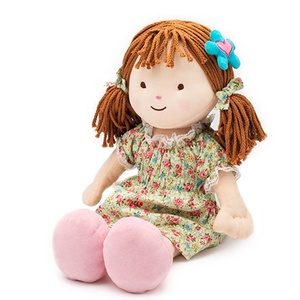
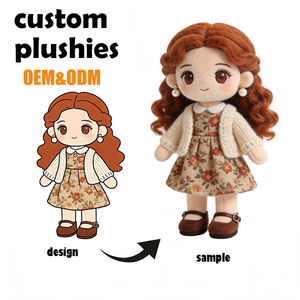
Custom plush stuffed animals and cotton rag dolls represent one of the most versatile retail and promotional product segments. Manufacturing high-grade plush toys involves precise fabric selection (crystal super-soft velour, coral fleece, long-pile faux fur, or 100% organic cotton) paired with high-density polyester fiber filling. For anime-style 20cm cotton dolls, facial features are executed using computer-guided multi-head embroidery machines capable of micro-stitching complex expression details with sub-millimeter precision.
B. Vinyl Art Figures & PVC Designer Action Figures
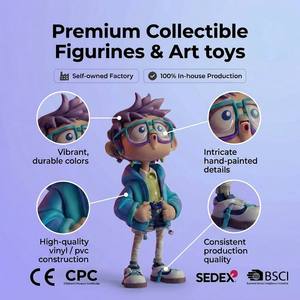
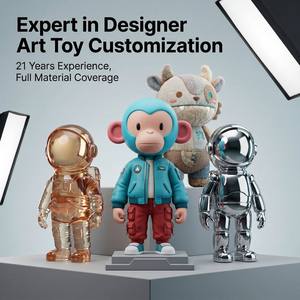
Designer vinyl figures and collectible art toys demand rigid dimensional stability and flawless surface finishing. The production workflow starts with ZBrush digital sculpting, followed by wax master creation, copper electroplating, and steel injection molding or rotational casting (rotocasting). Eco-friendly, non-phthalate PVC resins are utilized to pass strict heavy metal leaching tests (EN71-3). Coloration is applied via automated pad printing, spray painting with custom Pantone-matched enamel lacquers, and precise hand-detailing.
C. Wearable Character Mascots & Promotional Costumes
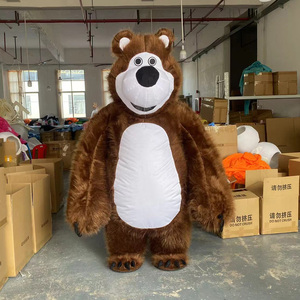
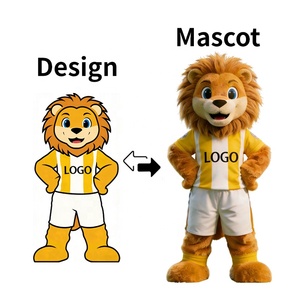
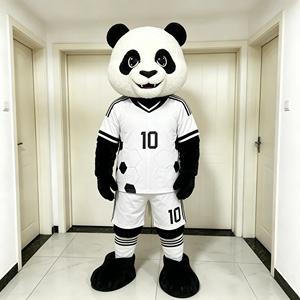
Walkable plush mascot suits for sports franchises, corporate branding, and amusement parks demand specialized ergonomic and structural engineering. Utilizing high-density EVA foam internal skeletons, lightweight fiberglass head helmets, and built-in ventilation micro-fans, our mascot costumes balance performer comfort with structural durability. All outer fabrics undergo flame retardancy treatment complying with EN71 Part 2 / ASTM F963 standards.
4. Industrial Sourcing Matrix: Plush vs. Vinyl vs. Mascot Suits
Selecting the optimal manufacturing methodology for your brand requires evaluating minimum order quantities (MOQ), mold tooling costs, production lead times, and regulatory compliance. The following technical comparison matrix illustrates key operational parameters across custom product categories:
| Manufacturing Dimension | Plush & Cloth Rag Dolls | Vinyl & PVC Art Figures | Walkable Mascot Costumes |
|---|---|---|---|
| Primary Raw Materials | Crystal Velour, Cotton, GRS Recycled Polyester | Non-Phthalate PVC, Vinyl, ABS, Resin | High-Density EVA Foam, Plush Fabric, Mesh |
| Tooling / Mold Cost | Low (Paper Pattern Cutters) | Moderate to High (Steel Injection / Copper Molds) | Low to Moderate (3D Sculpted Foam Molds) |
| Standard Production MOQ | 1,000 pcs - 3,000 pcs | 500 pcs - 2,000 pcs | 1 unit - 10 units |
| Prototyping Lead Time | 7 - 12 Working Days | 14 - 21 Working Days | 10 - 15 Working Days |
| Bulk Production Timeline | 30 - 45 Days | 40 - 55 Days | 15 - 25 Days |
| Key Safety Compliance | EN71 1-3, ASTM F963, CPSIA, OEKO-TEX | REACH, Phthalates Free, Heavy Metal Testing | EN71-2 Flame Retardancy, Air Circulation |
5. Sourcing & Manufacturing Future Trends (2025–2030)
The custom doll manufacturing industry is undergoing a structural transition driven by shifting consumer values, regulatory mandates, and technological breakthroughs. Procurement teams that align their supply strategies with these upcoming trends will achieve significant competitive advantages in brand equity and operational resilience.
Trend 1: Sustainable Supply Chains & Circular Materials
Environmental social governance (ESG) directives are forcing global retail brands to eliminate virgin synthetic plastics. Future-focused doll manufacturing relies heavily on Global Recycled Standard (GRS) fabrics spun from ocean-bound PET bottles, biodegradable cornstarch polyfill (PLA), and organic plant-dyed cotton textiles. Furthermore, non-toxic water-based paints are replacing solvent-borne paints in vinyl figure manufacturing.
Trend 2: The Blind Box & Collectible Designer Toy Boom
Driven by pop-culture trends, art toys, blind boxes, and IP licensing crossover editions are growing at unprecedented rates. Custom doll suppliers must offer high-precision vinyl molding capabilities alongside custom packaging engineering (such as foil-sealed blind bags, anti-counterfeiting holographic stamps, and collector window boxes) to support direct-to-consumer (DTC) and retail drops.
Trend 3: Smart Technology & Haptic Integration
Next-generation plush and customized dolls increasingly incorporate smart electronics. From push-button sound modules, recordable voice chips, and haptic feedback motors to embedded NFC tags that connect physical toys to digital Web3 gaming platforms, custom manufacturers must offer seamless integration of electronics certified under FCC, CE-EMC, and RoHS standards.
6. Strict Quality Assurance Protocols & Global Testing Standards
Safety is non-negotiable in commercial toy manufacturing. A single product recall can inflict irreversible financial and reputational damage on a brand. Our 4-Tier In-Line Quality Inspection framework ensures that every item leaving the factory floor fulfills or exceeds international safety requirements:
1. IQC (Incoming Quality Control): Rigorous spectrographic analysis of fabrics, thread, vinyl pellets, and dyes to confirm the absence of lead, cadmium, azo dyes, formaldehyde, and phthalates prior to entering production lines.
2. IPQC (In-Process Quality Control): Continuous monitoring of stitching tension, seam strength tests (pull testing at 21 lbs / 90N force for 10 seconds), needle detection scans, and injection molding dimension checks.
3. FQC (Final Quality Control): 100% metal and broken needle detection scanning using dual-head electromagnetic detector units to eliminate sharp metallic hazards in plush bodies.
4. OQC (Outgoing Quality Control): Third-party laboratory validation (SGS, Intertek, TÜV Rheinland) issuing official test reports for EN71, ASTM F963, CPSIA, and REACH compliance prior to customs release.