1. Executive Summary: The Evolution of Branded Plush Manufacturing in New Zealand
The global plush toy market is undergoing a seismic transformation driven by shifts in consumer values, stringent international safety mandates, and a growing demand for bespoke character IP. Within New Zealand (Aotearoa), commercial buyers—ranging from corporate enterprises in Auckland to boutique eco-resorts in Queenstown—are redefining what it means to source high-grade branded plush merchandise. Procurement teams no longer accept off-the-shelf catalog toys tagged with a simple screen-printed ribbon; today’s market demands full-scale Original Equipment Manufacturing (OEM) and Original Design Manufacturing (ODM) solutions tailored to local cultural narratives, sustainability targets, and child safety compliance.
As a specialized OEM/ODM division under The Beverly Hills Teddy Bear Company framework, our operations synthesize three decades of global manufacturing heritage with focused supply chain logistics tailored for the New Zealand market. This whitepaper analyzes the key technical, regulatory, and commercial factors that set top-tier global plush exporters apart in the Kiwi landscape, offering actionable intelligence for brand managers, promotional agencies, and retail buyers.
Strategic Information Gain Insight: Sourcing plush merchandise into New Zealand requires navigating unique geographic logistics, strict biosecurity standards (MPI clearance), and precise compliance with AS/NZS ISO 8124 (Australian/New Zealand Standard for Toy Safety). Exporters who fail to integrate mechanical testing during prototyping face massive customs delays and import rejections at Ports of Auckland or Lyttelton.
Key Market Drivers in the NZ Plush Sector:
- Eco-Centric Material Mandates: High consumer demand for GRS-certified recycled plush fabrics (rPET) derived from ocean-bound plastics, aligned with New Zealand’s clean-green ethos.
- Mascot & Indigenous Cultural Respect: Elevated demand for custom Kiwi fauna designs (Kiwi birds, Tuatara, Kakapo, Hoiho) executed with authentic visual accuracy and ethically verified artwork approvals.
- Omnichannel Merchandising: Hybrid usage of plush toys across corporate give-aways, airport souvenir retail, university graduation gifts, and therapeutic medical comforters.
2. Technical Plush Engineering: Materials, Fabrics, and Internal Fill Standards
Creating a high-margin, durable custom plush toy requires deep expertise in textile selection, fiber engineering, and seam stress dynamics. The sensory response of plush—its touch, compressibility, and structural memory—determines its perceived retail value. Below is a structural breakdown of the raw materials utilized in our custom manufacturing processes for New Zealand buyers.
Low-pile synthetic fabrics featuring high thread density. Ideal for detailed character sculpting, sub-3cm miniature plush, and complex embroidery patterns without pile interference.
High-pile materials (8mm to 35mm) providing luxurious tactile softness. Used extensively in classic teddy bear production, wildlife mascots, and high-end retail collections.
Post-consumer recycled polyester fiberfill engineered for high resilience, shape retention, and allergen-free safety. Fully compliant with Global Recycled Standard (GRS) audit trails.
Embroidery Density & Sublimation Tech
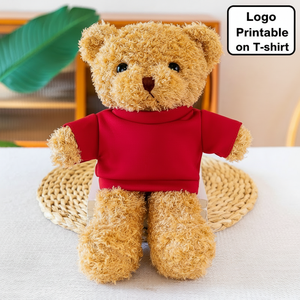
To ensure company logos and mascot facial expressions remain crisp after years of handling, we apply high-density thread embroidery (up to 12,000 stitches per square decimeter) combined with precision laser-cut applique. For photo-realistic patterns—such as custom clothing prints for branded teddy bears—heat transfer dye-sublimation ensures zero color bleeding and exceptional color fastness under UV exposure.
3. Localized Application Scenarios Across New Zealand Key Sectors
Different commercial landscapes require specialized product specs. Our experience exporting custom plush to New Zealand spans several primary B2B verticals, each with distinct design goals and compliance benchmarks:
| Industry Vertical |
Primary Product Type |
Key Design Objective |
Safety & Material Focus |
| Tourism & Heritage Retail |
Native Wildlife Plush (Kiwi, Kea, Penguin) |
High visual authenticity for souvenir gift shops & airport outlets |
OEKO-TEX Standard 100, Washable PV Plush |
| Corporate & Agri-Tech |
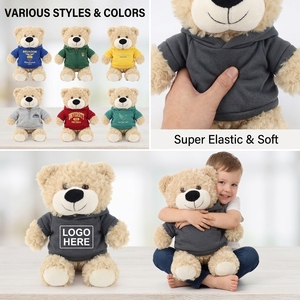
Branded Mascot Bears with Apparel |
Brand recall at events like Fieldays & tech expos |
Precision Pantone color-matched t-shirts & hoodies |
| Education & Sports |
Rugby & University Mascot Plushies |
Fan engagement, fundraising merchandise, alumni gifts |
Heavy-duty seam stitching, custom embroidered logos |
| Healthcare & Charities |
Sensory Soft Comforters & Therapy Dolls |
Emotional comfort for children’s hospital wards |
Zero small detachable parts, flame-retardant fill |
| FMCG & Retail Promotions |
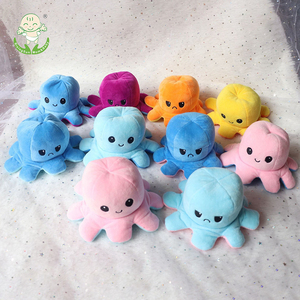
Reversible Mood Plush & Blind Box Toys |
High social media virality & gift-with-purchase campaigns |
Cost-effective bulk packaging, compact freight volume |
Whether creating a custom plush companion for a children's book author in Wellington or supplying a 10,000-unit promotional bear order for a nationwide insurance campaign in Auckland, matching product architecture to regional intent is critical to maximizing ROI.
4. Safety Compliance & Quality Assurance: Navigating AS/NZS ISO 8124
New Zealand enforces strict product safety standard regulations under the Consumer Guarantees Act and Fair Trading Act. For children's toys, adherence to AS/NZS ISO 8124 is mandatory to prevent choking hazards, toxic heavy metal exposure, and flammability risks.
Core Testing Protocols for NZ Import Approvals:
- AS/NZS ISO 8124.1 (Mechanical & Physical Properties): Ensures no small parts can detach under a torque test of 0.45 Nm or a tension force of 70 N. Eyes, buttons, and decorative tags must undergo rigorous pull-testing.
- AS/NZS ISO 8124.2 (Flammability): Tests the rate of flame spread across outer plush fabrics, ensuring materials self-extinguish or burn below maximum allowed speeds (30mm/sec).
- AS/NZS ISO 8124.3 (Migration of Certain Elements): Chemical analysis confirming heavy metals (such as Lead, Cadmium, Mercury, Chromium, and Arsenic) in dyes and plastic parts are well below legal parts-per-million (PPM) thresholds.
Every Production Run Batch Tested: All plush toys manufactured in our facilities undergo third-party lab testing (SGS, TÜV Rheinland, or Intertek) prior to shipping. Certificates of Conformance (CoC) are supplied directly to importers for smooth clearance with NZ Customs and Medsafe/Consumer Protection agencies.
5. The P.R.I.C.E. Manufacturing Philosophy
As a flagship framework established across our manufacturing network, our production roadmap follows the P.R.I.C.E. methodology—a systematic operational approach engineered over 30 years to guarantee quality consistency from concept sketch to final container delivery.
Creating products that perform at retail and generate high sell-through. We focus on tactile hand-feel, proportion accuracy, and seam integrity.
Uncompromising ethical compliance. Our factories hold ICTI, Sedex SMETA, and ISO 9001 certifications, ensuring fair labor standards.
Incorporating sound chips, recordable modules, LED accents, sensory weighted beads, and modern eco-friendly fabrics into traditional plush.
Combined with Collaboration (transparent communication with client creative teams) and Execution (on-time delivery via major maritime lines serving Auckland, Tauranga, and Lyttelton), this framework underpins our long-standing relationships with Fortune 500 brands including Disney, Coca-Cola, Target, and Universal Studios.
6. Comparative Analysis: Custom OEM/ODM Exporter vs. Catalog Wholesale Importers
When procuring bulk plush merchandise in New Zealand, corporate buyers often choose between commissioning a custom OEM build or purchasing stock blank plush from local distributors. Below is a strategic comparison of both procurement channels:
| Factor |
Direct Custom OEM/ODM Exporter |
Off-the-Shelf Wholesale Stockist |
| Design Originality |
100% Unique Character IP, 3D Sculpting from scratch |
Generic pre-existing patterns, limited to logo printing |
| Unit Cost (Bulk Orders) |
Factory-direct pricing (30–50% cost savings at scale) |
High middleman markup per unit |
| Fabric & Color Matching |
Exact Pantone color dyeing, custom pile height & texture |
Restricted to stock colorways in warehouse |
| Safety & Eco Certification |
Batch-specific AS/NZS ISO 8124 test reports & GRS certificates |
Generic old test certificates, variable batch safety |
| Branding Real Estate |
Custom woven labels, hangtags, custom packaging boxes, embroidery |
Small heat-transfer logo on stock shirt/ribbon only |
7. The Step-by-Step Custom Plush Prototyping & Production Workflow
Transitioning from a 2D sketch or brand concept into a finished container shipment involves a rigorous step-by-step engineering process designed to eliminate risks prior to mass manufacturing.
Step 1: Design Consultation & Spec Sheet Engineering
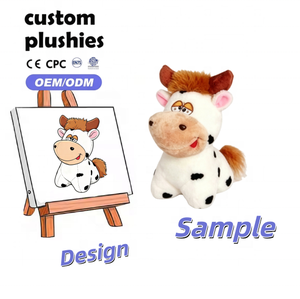
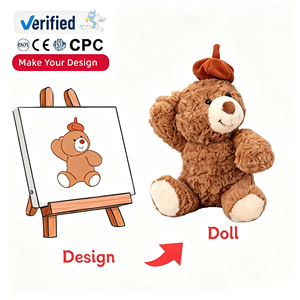
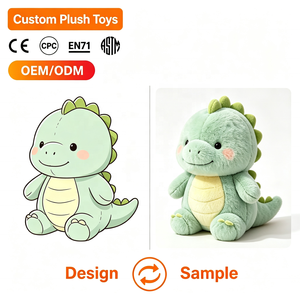
Clients submit vector artwork, character illustrations, or rough sketches. Our master pattern makers review design proportions, recommend optimal fabrics (e.g., crystal velboa vs. PV fleece), specify seam placements, and calculate estimated unit costs and CBM (cubic meter) shipping volume.
Step 2: 3D Clay Sculpt & Clay-to-Pattern Clay Prototyping
For complex characters or licensed IP, we create physical or digital 3D models before cutting fabric. A physical clay model or preliminary master sample is stitched, stuffed, and detailed. Clients receive photos, 360-degree video reviews, or physical prototypes for hands-on evaluation.
Step 3: Revision & Golden Sample Sign-Off
We refine prototype features based on client feedback—adjusting eye placement, embroidery thread colors, or softness density. Once approved, this becomes the "Golden Sample," serving as the absolute benchmark for factory quality control during mass manufacturing.
Step 4: Mass Production & In-Line Quality Control
Fabric cutting is executed via automated laser cutter tables to ensure 100% piece consistency. Sewing lines follow strict needle-detector safety procedures (metal detection to ensure zero broken needles remain inside plush). Fill density is monitored via computerized weight checks.
Step 5: Lab Testing & Freight Logistics to New Zealand
Samples from the production line are sent directly to ISO 17025 accredited laboratories for AS/NZS ISO 8124 compliance testing. Upon passing, cargo is sea-freighted (FCL/LCL) or air-freighted directly to specified New Zealand destination ports, complete with customs documentation and biosecurity clearances.
8. Frequently Asked Questions (FAQ) for New Zealand Buyers
Below are authoritative answers to common technical and commercial questions encountered by Kiwi procurement officers, brand managers, and importers when contracting bulk plush manufacturing.
Q: What is the standard Minimum Order Quantity (MOQ) for custom plush orders?
Our standard production MOQ typically starts at 1,000 pieces per design, depending on the size and complexity of the plush toy. For larger 30cm+ plush or specialized mascots, lower MOQs can be evaluated on a case-by-case basis.
Q: How long does the entire prototyping and shipping timeline take to NZ?
Prototype development usually takes 2 to 3 weeks. Mass production requires 30 to 45 days after sample approval. Sea freight to New Zealand ports (Auckland, Tauranga, Lyttelton) takes approximately 18 to 25 days, while air freight takes 5 to 7 days.
Q: Are your plush products compliant with New Zealand safety laws?
Yes. All plush items manufactured for the New Zealand market are built to satisfy AS/NZS ISO 8124 standards (Parts 1, 2, and 3). Independent lab test documentation is provided with every shipment.
Q: Can we use eco-friendly recycled materials for our custom plush?
Absolutely. We offer 100% GRS-certified recycled fabric (rPET velboa/plush) and 100% recycled polyester fiberfill made from post-consumer plastic bottles, accompanied by eco hangtag options.
Q: Can you work directly from hand-drawn artwork or 2D digital files?
Yes! Our experienced pattern engineering team specializes in translating 2D concept art, sketches, vector graphics, or brand logos into fully realized 3D stuffed animals.
Q: Who owns the Intellectual Property (IP) rights to our custom plush design?
You maintain 100% ownership of your proprietary design and IP. We operate under strict Non-Disclosure Agreements (NDAs) and never sell or reproduce client custom designs for third parties.